In this post I explain how I make sourdough bread at home. The recipe and technique combine ideas from Hugh Fearnley-Whittingstall (River Cottage Everyday) and Dan Lepard (The Handmade Loaf), along with tips I’ve picked up online and through my own baking experience.
Note: I originally posted an update on 31 March 2011 with further lessons and observations since this was published.
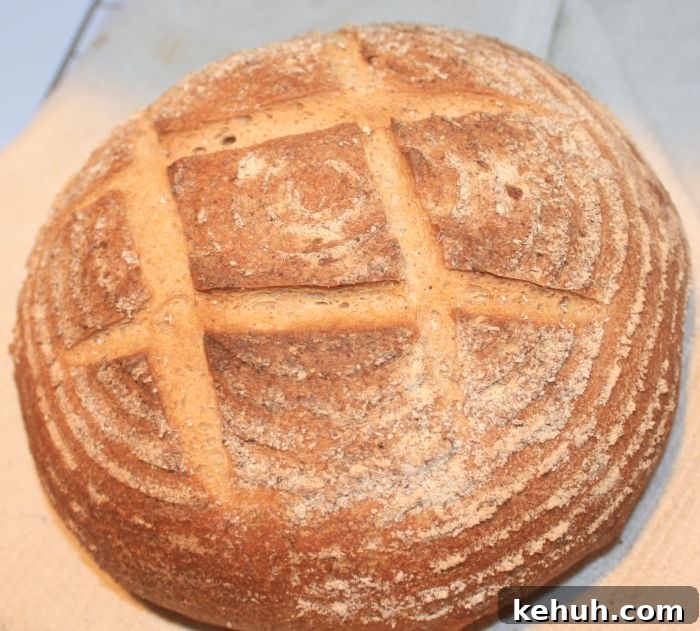
This guide was prompted by a conversation on Twitter about making sourdough. I promised to write a simple “how to” to show that sourdough is accessible for enthusiastic amateurs. There are many valid methods — this is what works for me. Feedback from home bakers and professionals is welcome; I’m always keen to learn and improve.
The whole process takes just under 20 hours from start to finish. That may sound long, but most of the time the dough is resting and you only need to do a little at intervals. The slow timetable helps develop flavour and texture.
How to make sourdough bread
Below is a straightforward recipe and method for making two loaves of about 1 kg each. I weigh ingredients in a jug on scales for accuracy.
Flours
Flour quality matters. If you only have supermarket own-brand flour, you will still make bread that’s better than standard factory loaves. If you can source higher-quality strong flours from specialist millers, you’ll notice improved flavour and texture. Use the best you can access.
Sourdough Bread Recipe
Ingredients
For the sponge
200g sourdough starter (see notes below)
500g strong white flour
550g warm water
For the loaf
200g strong wholemeal flour (optional — you can use all white and adjust total weight)
400g strong white flour
20g sea salt
For proving
A few handfuls of rye or rice flour
Method
The evening before baking, make the sponge. Put the starter and flour in a mixing bowl, add the warm water and mix to a loose paste. Cover with a towel and leave in a warm place overnight (around 20°C/68°F is ideal). By morning it should be active and bubbly and show signs of stringing — this indicates good fermentation.
The next stage can be done by hand or with a stand mixer. Add the remaining flours to the sponge. Do not add salt yet. Mix until the flour is evenly wetted; you do not need to do vigorous kneading. Let the mixture rest for 10 minutes to allow hydration.
Add the salt and mix again until evenly distributed. The dough will feel rough and sticky at this point; that’s normal. Transfer to a clean, lightly oiled bowl and cover to prevent a dry crust.
We will use a series of gentle folds rather than heavy kneading. After the initial 10-minute rest, remove the dough (use lightly oiled hands to avoid adding extra flour) and perform a stretch-and-fold: grab one side, stretch it up and fold it over the dough. Rotate the bowl and repeat until you have folded all sides. Return the dough to the bowl and cover.
Repeat the folding sequence at these intervals: 20 minutes after the first fold, then 30 minutes later, then at one-hour intervals three times. After these folds, let the dough rest for about an hour before shaping. Timings are flexible — small variations won’t ruin the loaf.
For shaping, use bannetons if you have them. Alternatively, use bowls lined with a close-weave tea towel and well-dusted with rye or rice flour to prevent sticking. Shape the dough into loaves, place them seam-side up in the proving baskets, cover, and leave to prove in a warm place for 4–5 hours. The dough should approximately double in size.
Preheat your oven toward the end of the proving period. A baking stone or pizza stone gives the best crust and oven spring; if you don’t have one, use a hot baking tray. When ready, turn a proved loaf onto the hot stone or tray, slash the top to release surface tension (this helps the loaf expand and creates an attractive pattern), and place it in the oven. Spraying water into the oven at this point can help create steam for a better crust.
Bake at 220°C (425°F) for about 20 minutes, then reduce the temperature to 200°C (400°F) and bake for a further 10–20 minutes, or until the loaf sounds hollow when tapped on the bottom. Exact times depend on your oven and loaf size; the hollow sound is the best guide to doneness.
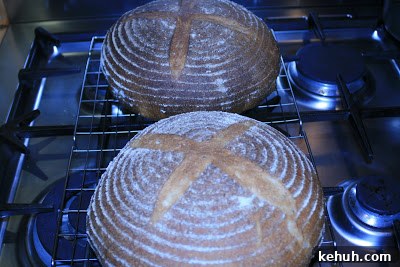
Cool the loaves on a rack until they are warm or cool enough to slice. Homemade sourdough rewards patience — enjoy the flavour and texture that come from simple ingredients and slow fermentation.
Edit 16th January 2011
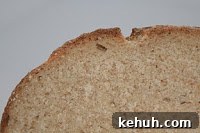
In response to a comment, here is an image of the crumb of one of my loaves. This particular crumb is a bit tight; updates explain why and how to improve openness in the crumb.
* Sourdough starter
A sourdough starter captures wild yeasts and bacteria from flour and the environment to create a natural ferment. There are several ways to create and maintain a starter: a simple flour-and-water method, or recipes that use fruit (raisins or currants) or yogurt to encourage fermentation. I store my starter in a 1,000 ml jar and feed it regularly; when active it bubbles and rises.
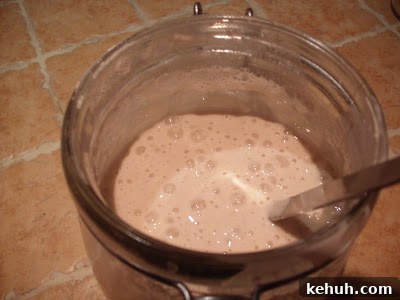
Keeping a starter is straightforward once you establish a routine. Feed it regularly, discard some when necessary, and it will last indefinitely. Try different methods and find what works best in your kitchen conditions.