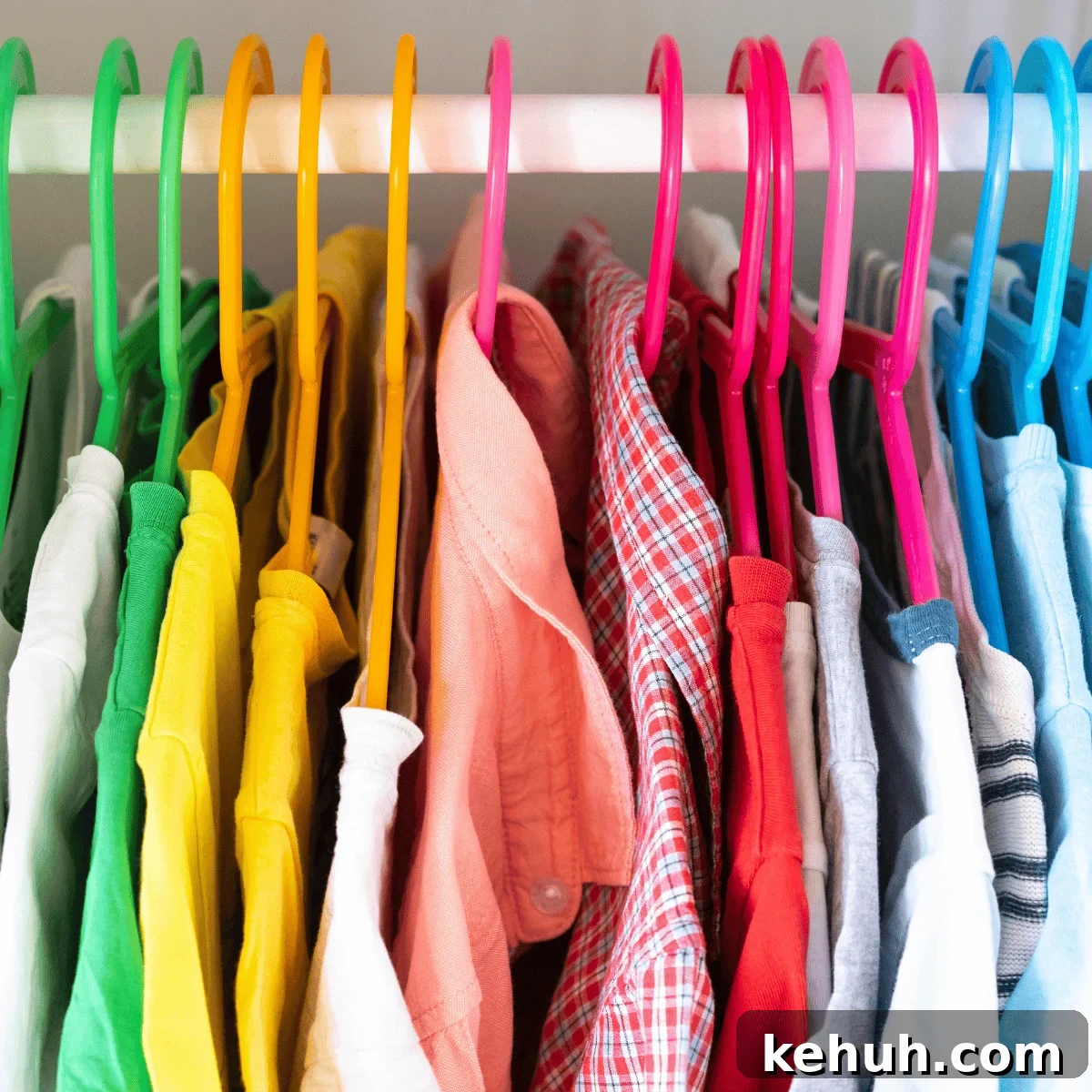
As a mother of eight, I developed a simple system to store and organize my kids’ clothes. This approach makes swapping seasonal wardrobes fast — often in just minutes.
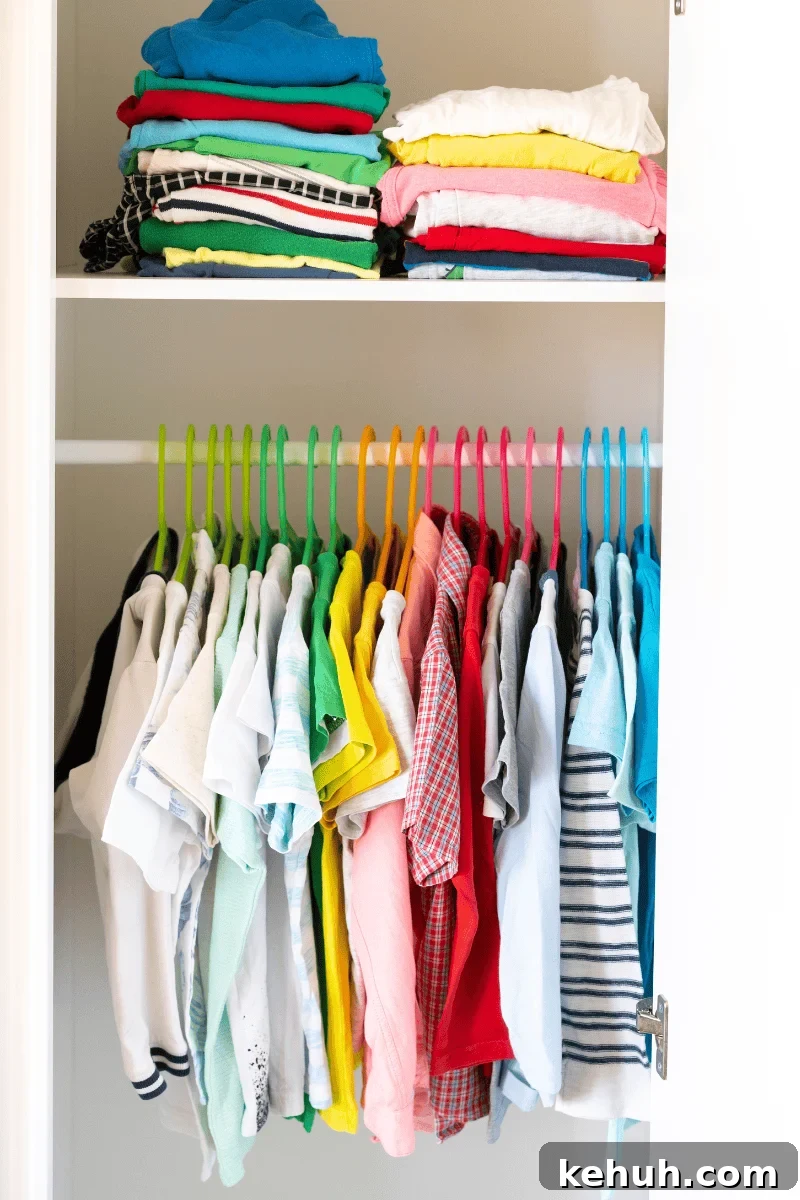
Finding a practical way to store and organize children’s clothing without letting it take over the house can feel overwhelming. The good news: you don’t need complicated systems or expensive organizers. Keep it simple, consistent, and accessible.
The core idea is to minimize where things live so clothes are easy to find and swap out.
With eight kids, limited closet space, and clothing that seems to outgrow itself overnight, I use a straightforward plan that anyone can follow. If it works for our busy household, it can work for yours too.
Seasonal and Hand-Me-Down Storage Made Simple
Steps to store and organize your kids’ clothes:
- Declutter
- Sort
- Store
Three main categories to organize for each child:
- Clothes and shoes that fit now and are in current rotation
- Clothes and shoes that will fit in the next year or two (next size up)
- Clothes and shoes that no longer fit
What supplies you’ll need
For each child you’ll want:
- Two storage totes (18-gallon totes work well)
- One small bin (about 14″ x 14″ is useful)
- A permanent marker for labeling
- Labels if you prefer a cleaner look
- Closet space for hanging items plus one or two dresser drawers
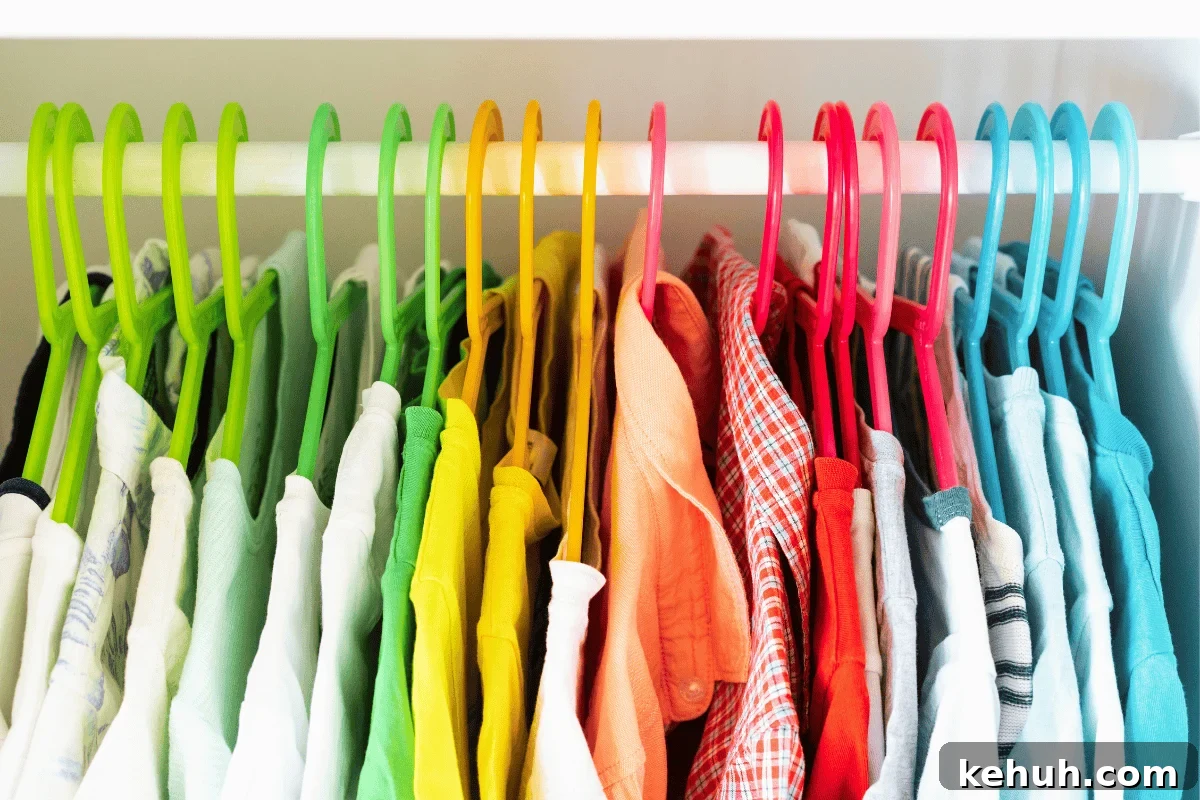
Declutter what you don’t need
Decluttering is the most important step and cannot be skipped. Limiting how much clothing your kids own saves space, reduces decision fatigue, and makes laundry and dressing simpler. I favor a capsule wardrobe approach: keep only what’s useful and buy intentionally for the next size up.
Benefits of a minimal capsule wardrobe for kids
- Less laundry overall
- Fewer items to track and maintain
- More free space in your home
- Lower clothing costs when you buy fewer pieces
- Easier management of hand-me-downs
- Ability to invest in higher-quality items that last through multiple children
A capsule checklist or printable can make this step quicker and less stressful.
How to sort kids’ clothes
Step 1: Gather all clothing into one spot
Collect every piece of children’s clothing from around the house. Seeing everything together gives a realistic view of what you own and helps you make better decisions.
Step 2: Sort by gender and size
Create piles like “girl size 3T” or “boy size 24 months.” Sort shoes by size as well. Use a checklist to decide what to keep, donate, or pass on as hand-me-downs.
Step 3: Make a “next size up” bin for each child
Put upcoming sizes into a labeled storage bin for each child. Younger children often need several sizes saved; older kids may need fewer. I often include off-season items in these bins so everything the child will wear soon is together.
For example, my four-year-old’s bin might hold sizes 5 and 6 plus some off-season 4T pieces.
Step 4: Store clothes the child fits now
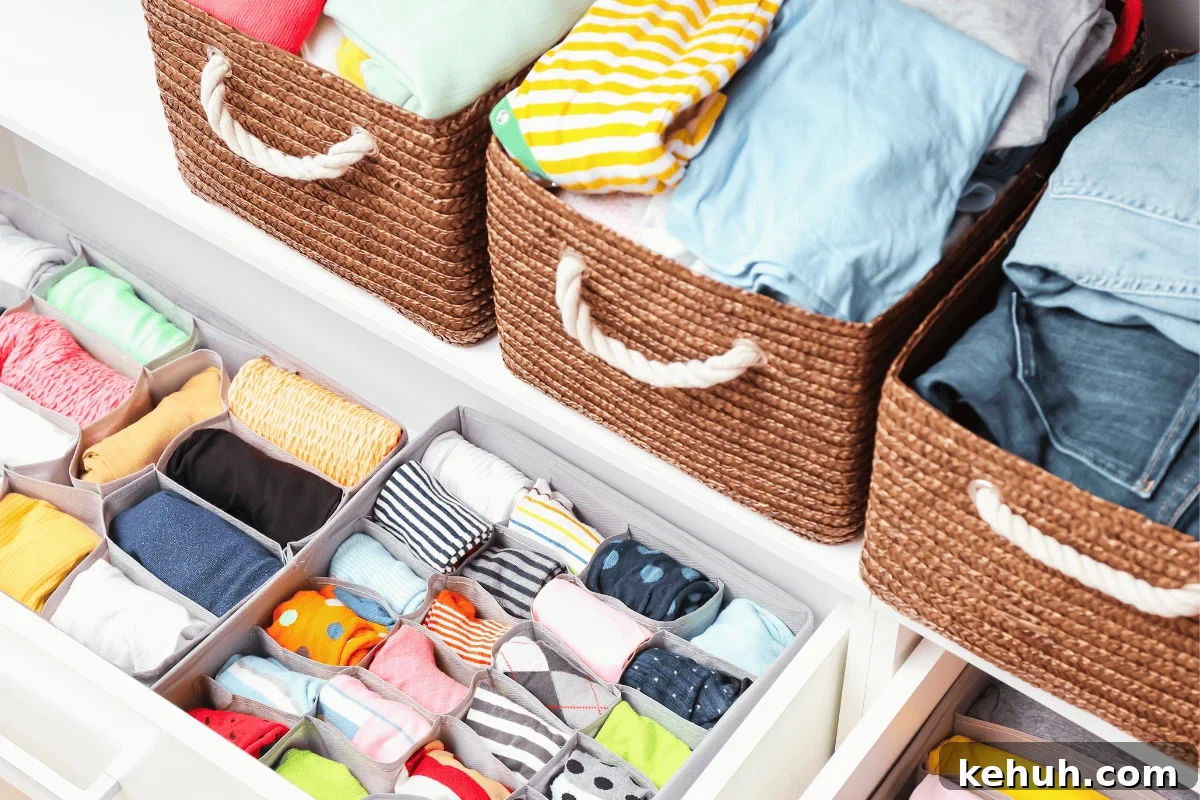
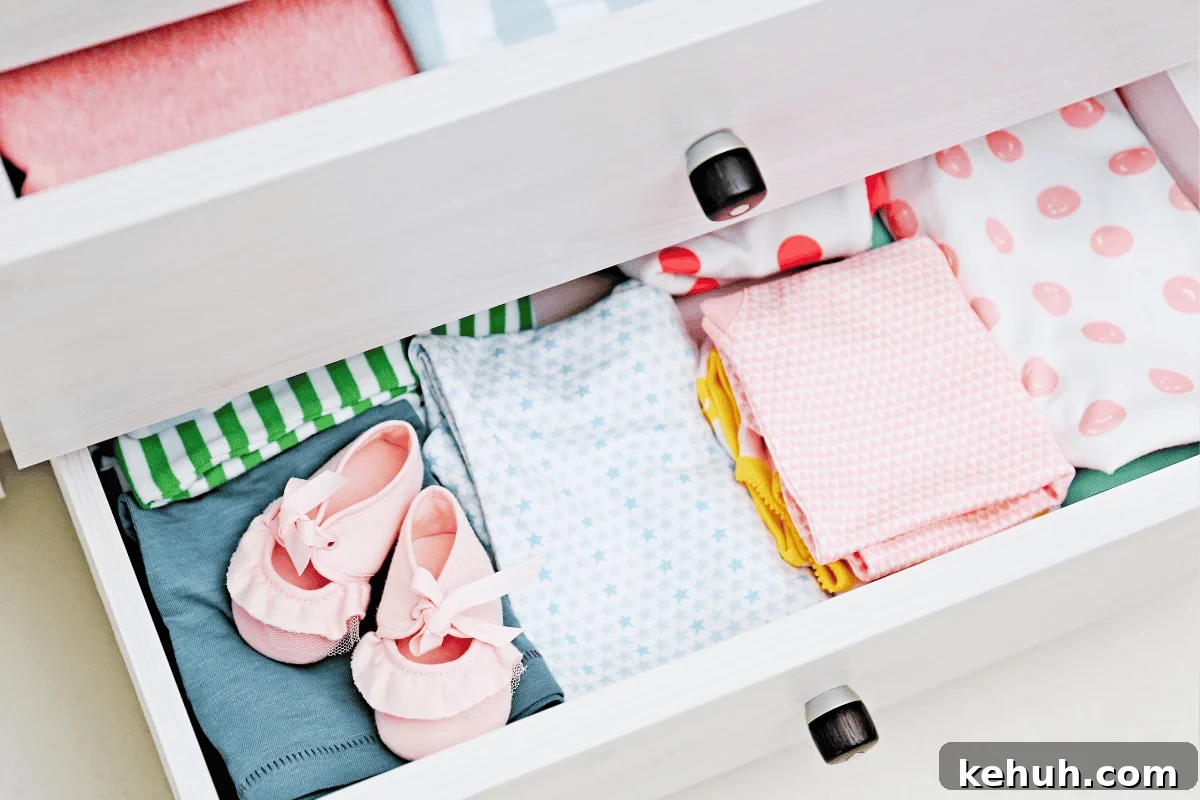
Keep current-season items in one or two dresser drawers and hang garments that benefit from hanging. If space is tight, kids can share closets or dressers. A shallow under-bed bin works well if you don’t have a dresser. Drawer organizers help maximize small drawer space.
Step 5: Manage outgrown clothing
Label a bin for outgrown items for each child. Put everything that no longer fits into that bin. If you plan to keep items for future children, consolidate them into as few bins as possible and set a limit so they don’t accumulate indefinitely. If you won’t use them, donate, pass them to friends or family, or sell at consignment.
Step 6: Sort shoes and coats
Store shoes similarly to clothing: a small bin in each child’s closet for the next size up and off-season footwear, daily shoes in the entryway or mudroom, and special-occasion shoes in the child’s closet. Outgrown shoes that won’t be used by siblings can go into a larger tub in the basement or under a bed.
For coats, keep upcoming winter jackets in each child’s closet during summer so you know what you already own. Outgrown coats can be stored in a single large tote in an out-of-the-way place.
How to store and organize daily
With everything sorted, follow these simple storage rules:
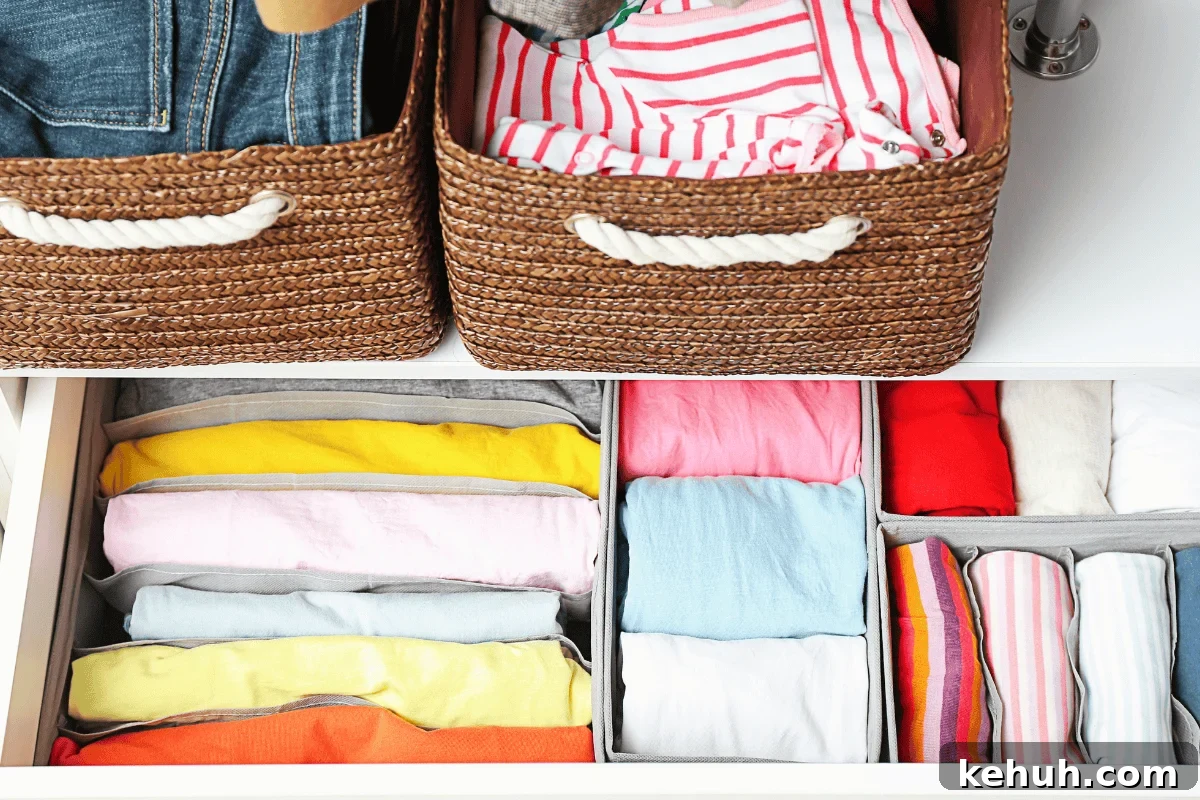
- Current clothing: hang in the closet and keep in 1–2 dresser drawers or an under-bed bin if needed.
- Daily shoes: keep in the entryway; less-used shoes can live in bedrooms.
- Each child’s “next size up” bin: store in their closet for easy seasonal swaps and when bringing new purchases home.
- Next-size shoes: keep in the closet or under the bed, preferably out of reach to avoid scattered pairs.
- Outgrown items not needed soon: seal in a bin and store in the basement, garage, or under a bed.
- Seasonal coats: keep next winter’s coats in the closet and outgrown ones in a tote elsewhere.
Why this system works
Kids don’t outgrow every brand or item at the same time, and it’s easy for outgrown pieces to pile up. Having clearly labeled, accessible bins makes it quick to file items away the moment they’re outgrown instead of letting them become clutter that will need sorting later.
When an item no longer fits, I wash it and then place it in the appropriate “next size up” bin or the labeled “has outgrown” bin. Because those bins are easy to reach, filing takes minutes. The result is less digging, more order, and a clear place to look when you need something.
We use the same process for hand-me-downs so they don’t create extra clutter.
Swapping seasons made easy
Switching summer and winter wardrobes becomes fast and low-stress. Pull the child’s “next size up” bin from their closet, fill their drawers with the appropriate seasonal items, and move off-season pieces into either the outgrown bin or the next-size bin depending on whether they’ll fit again. Kids enjoy helping, which makes it even easier.
More organizing and decluttering posts
- How to Declutter and Organize Your Small Bathroom
- How to Create a Kid’s Capsule Wardrobe {Free Printable Checklist}
- Decluttering Kids Toys
- Minimalist Baby Capsule Wardrobe