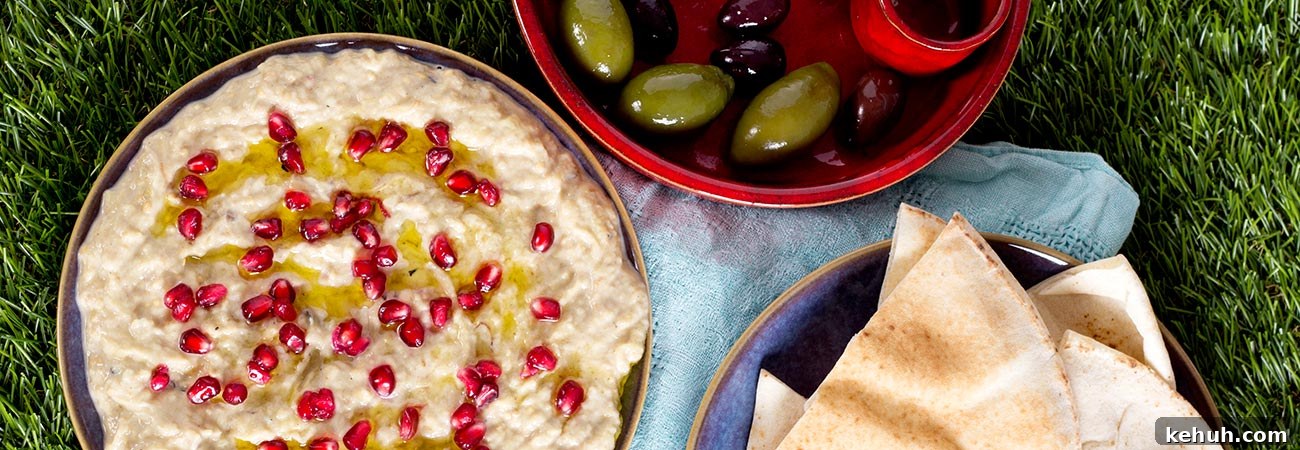
Ambrosia is a word I use sparingly. It literally means “food of the gods,” and while chefs and writers often toss it around casually, I reserve it for dishes that genuinely deserve the praise.
Baba Ghanoush—also spelled baba ghanouj, and related to mutabal or moutabal—has that rare quality. This smoky roasted aubergine dip comes from the Middle East and, to me, ranks among the most satisfying mezze. I first fell for it through repeated visits to Lebanese restaurants early in my relationship; ever since, it has been a reliable crowd-pleaser.
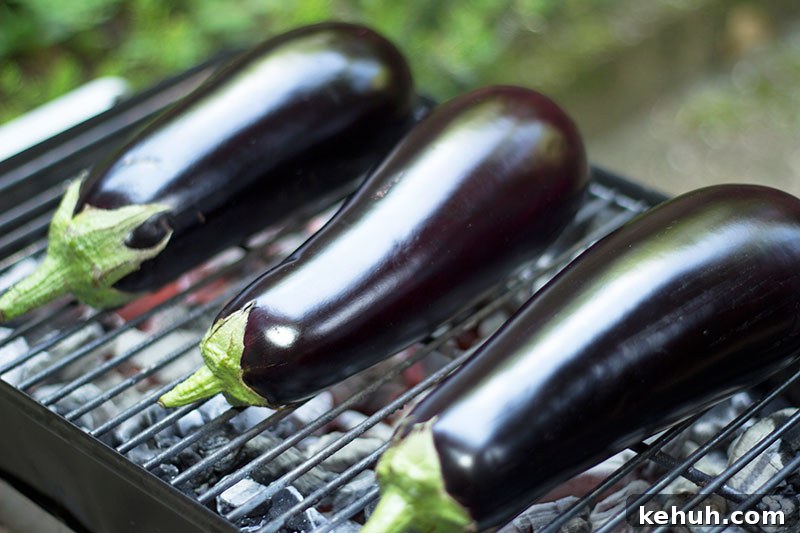
People rarely decline baba ghanoush. Whenever I bring a bowl to the table there are immediate “ooooh” and “mmmm” reactions, even if a full meal is already laid out. Over the years I’ve experimented with many versions, from very simple to boldly spiced, but I always return to a pared-back approach with one non-negotiable rule: char the aubergines thoroughly.
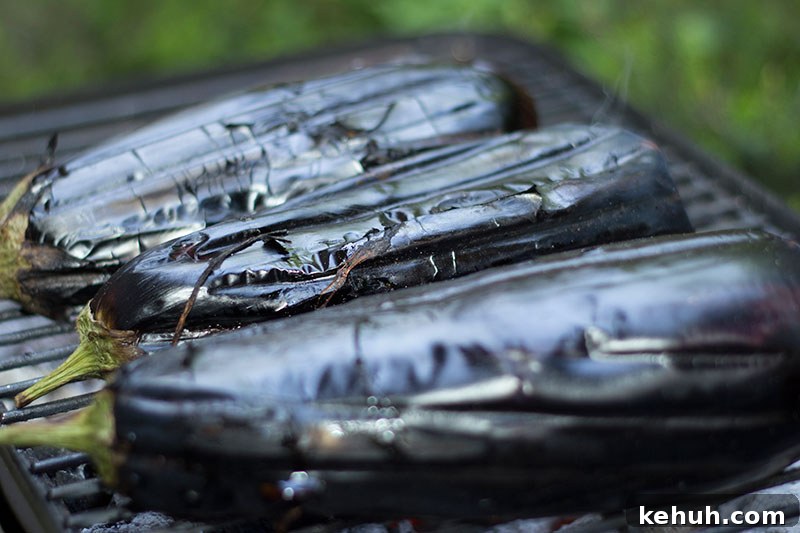
The defining characteristic of great baba ghanoush is its deep, smoky aubergine flavor. You won’t achieve that by baking in an oven or trying to singe skins on a gas hob. Those methods either miss the smoke or are slow and messy. For authentic char and concentrated flavor, fire up the BBQ.
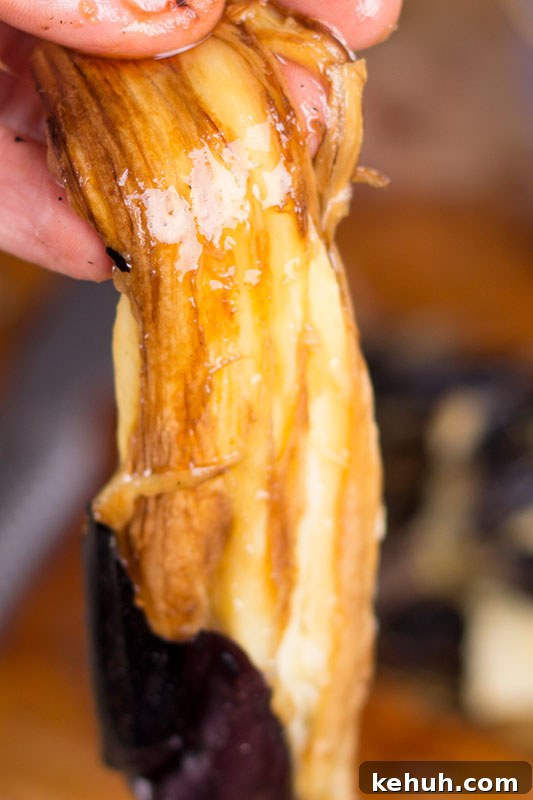
How the inside of your aubergines need to look!
Because baba ghanoush is so irresistible, you’ll want to make a generous batch. Charring multiple aubergines on a grill is faster and cleaner than working over an indoor flame. Light the BBQ and let it get hot; prick each aubergine a few times, then place them on the grate. Rotate each fruit 90° every 5 minutes so all sides cook evenly. After about 20 minutes total—five minutes per “side”—they should be collapsed, split, and charred until the flesh is soft and falling apart. If they still look intact, keep cooking. The end result should feel ruined rather than merely cooked.
Once off the grill, let the aubergines cool slightly over a sieve or colander so excess juices drain away. When manageable, split them lengthways and scrape the flesh out into a bowl. Pay attention to the darker brown layers just inside the skin; they hold much of the smoky flavor. Avoid scooping up too much of the blackened skin, though a little is fine.
At this point the recipe is simple: mix the aubergine flesh with crushed garlic, lemon juice, tahini and a pinch of salt. Taste and adjust the seasoning. The dip benefits from resting, so make it a few hours or a day ahead if you can—this lets the flavors meld and deepen.
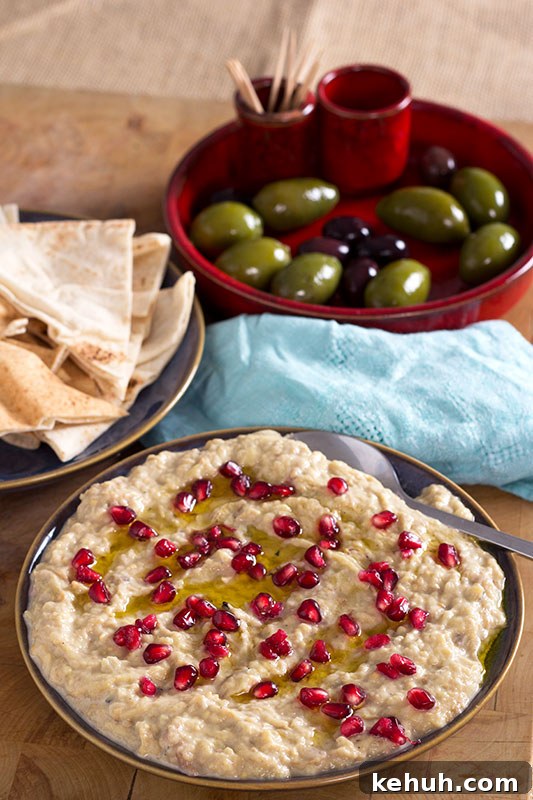
Finish with a drizzle of good olive oil and scatter pomegranate seeds for freshness and color. Serve with warm flatbread or crisp crudités such as red pepper strips and cucumber. It’s an ideal dip for sunny afternoons, when you can sit by the BBQ for twenty peaceful minutes while the aubergines char.
With no small degree of sincerity: try this and you’ll understand why I’m comfortable calling Baba Ghanoush ambrosia.
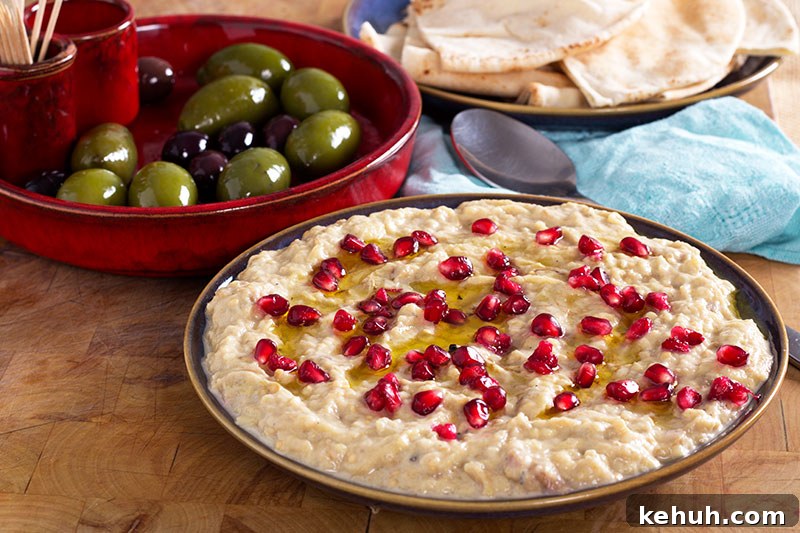
Baba Ghanoush
By Gavin Wren
Serves 4 as a side or starter
Requires a BBQ
Ingredients
Around 900g aubergine (about 3 medium or 2 large)
1 large garlic clove, crushed
3 tablespoons lemon juice
3 tablespoons tahini
A pinch of salt
To serve:
Good olive oil
A handful of pomegranate seeds
Flatbread or crudités (red pepper and cucumber work well)
Aubergine purchasing tips
Choose firm, heavy aubergines with glossy skin and a fresh green calyx. Lower-quality fruits often release more liquid when cooked, which can affect texture.
Directions
1. Light the BBQ and let it reach a high temperature. Prick each aubergine a few times with a fork and place on the grill.
2. Cook for about 20 minutes total, turning each aubergine 90º every 5 minutes so all sides char evenly. They should be deeply charred, collapsed and soft.
3. Remove from the grill and place in a sieve or colander over a bowl. Let cool for 30 minutes to allow juices to drain.
4. Slice each aubergine lengthways and scrape the flesh into a mixing bowl, avoiding most of the blackened skin but including the darker brown flesh near the skin.
5. Add crushed garlic, lemon juice, tahini and a pinch of salt. Mix well, adjust seasoning to taste, and let the dip rest if possible so flavors meld.
6. Serve drizzled with olive oil and sprinkled with pomegranate seeds, alongside warm flatbread or fresh crudités.