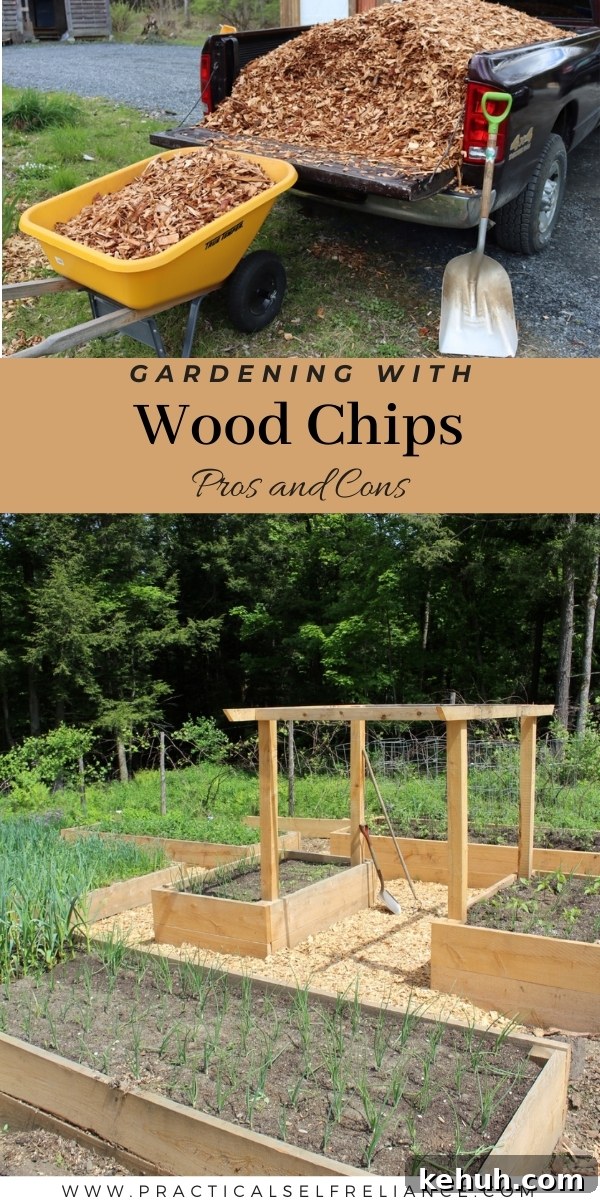
Wood chips can be incredibly helpful in the garden, provided they’re used correctly.
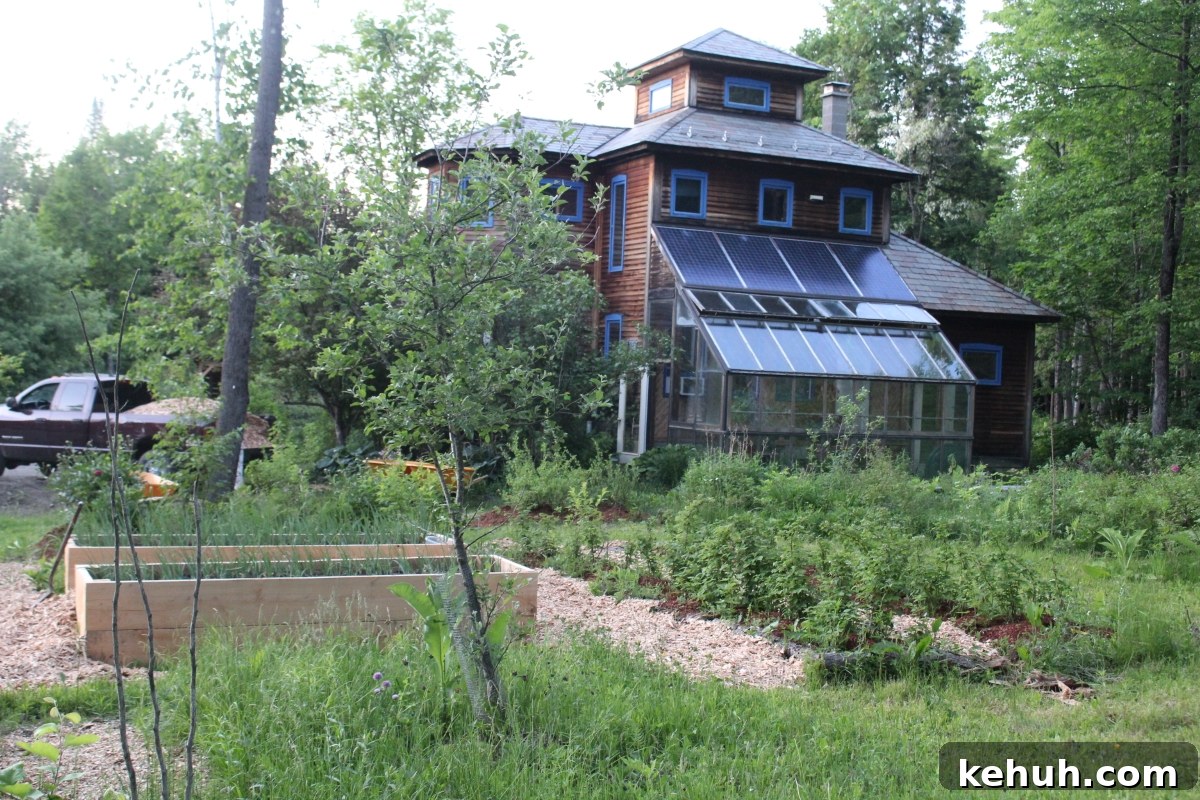
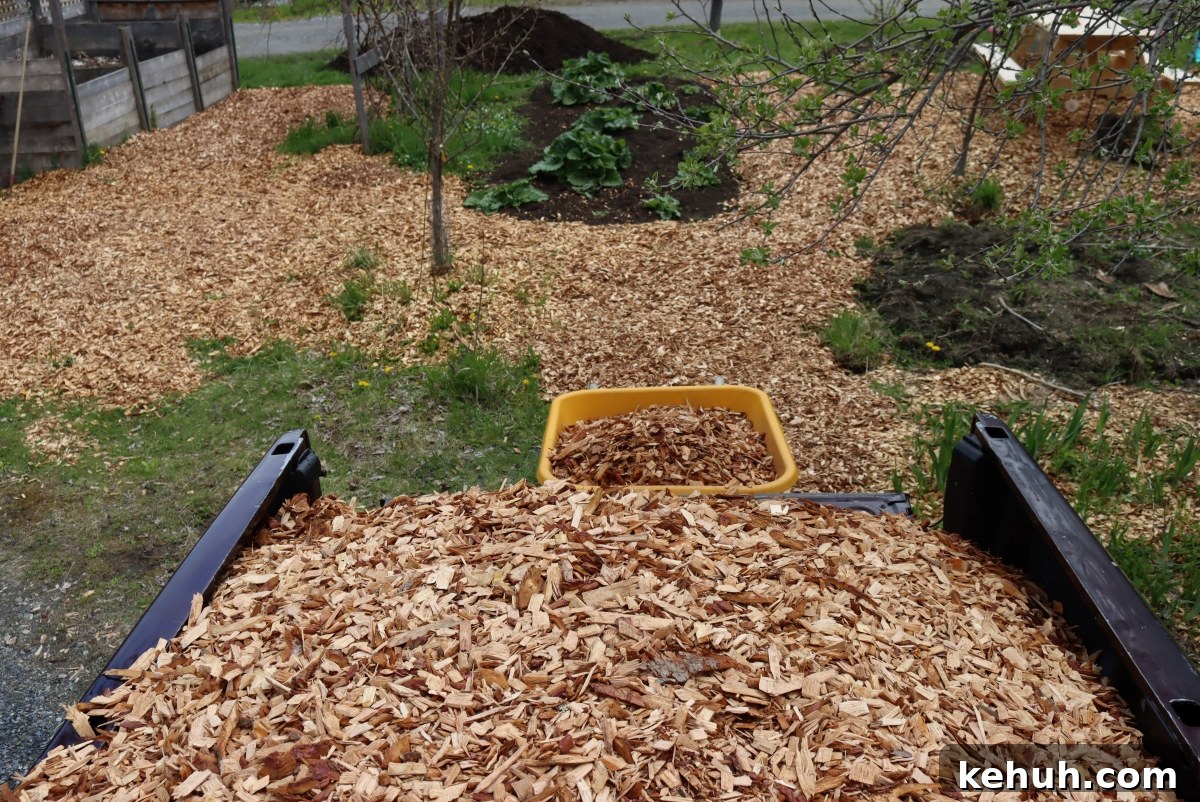
A few years ago I toured a friend’s permaculture education center and watched entire fields transform in a matter of months. The single most visible change was the extensive use of wood chips. Their new wood chipper was the centerpiece of the operation; it allowed them to convert waste into a tool that suppresses weeds, retains moisture, and builds soil.
That visit shaped how I manage our homestead. We rely on wood chips for much of our productivity: layered properly they reduce weeding and watering, encourage beneficial fungal activity, and turn otherwise unproductive ground into fertile garden space. I’d estimate 80–90% of our yield improvement comes from using wood chips effectively.
Wood chips for mulch
Mulching with wood chips is one of the simplest and most effective uses. When applied 2–3 inches deep, wood chip mulch provides many advantages, especially for perennial plantings:
- Weed control – A thick layer of chips dramatically reduces weed pressure. Unlike plastic mulch, wood chips are organic, don’t leach chemicals, and improve the soil as they break down.
- Water retention – Chips reduce evaporation and moderate soil moisture through dry spells, often eliminating the need for supplemental irrigation.
- Erosion prevention – Wood chips slow water flow and allow rainfall to percolate into the soil, which reduces runoff and topsoil loss.
- Temperature moderation – Chips insulate the soil, keeping it cooler in summer and warmer in spring and fall, which benefits root development and plant health.
- Reduced disease pressure – Mulch can limit soil splash that spreads fungal spores, helping to prevent issues like tomato blight and certain tree diseases.
- Stable, usable paths – Covered paths resist compaction and mud; biological activity under the chips maintains soil structure and reduces maintenance.
Beyond mulch, wood chips can be used for hotbeds, mushroom substrate, and as a base for creating mushroom compost. They work in both perennial and annual systems, though the approach differs between the two.
Using wood chips in permaculture
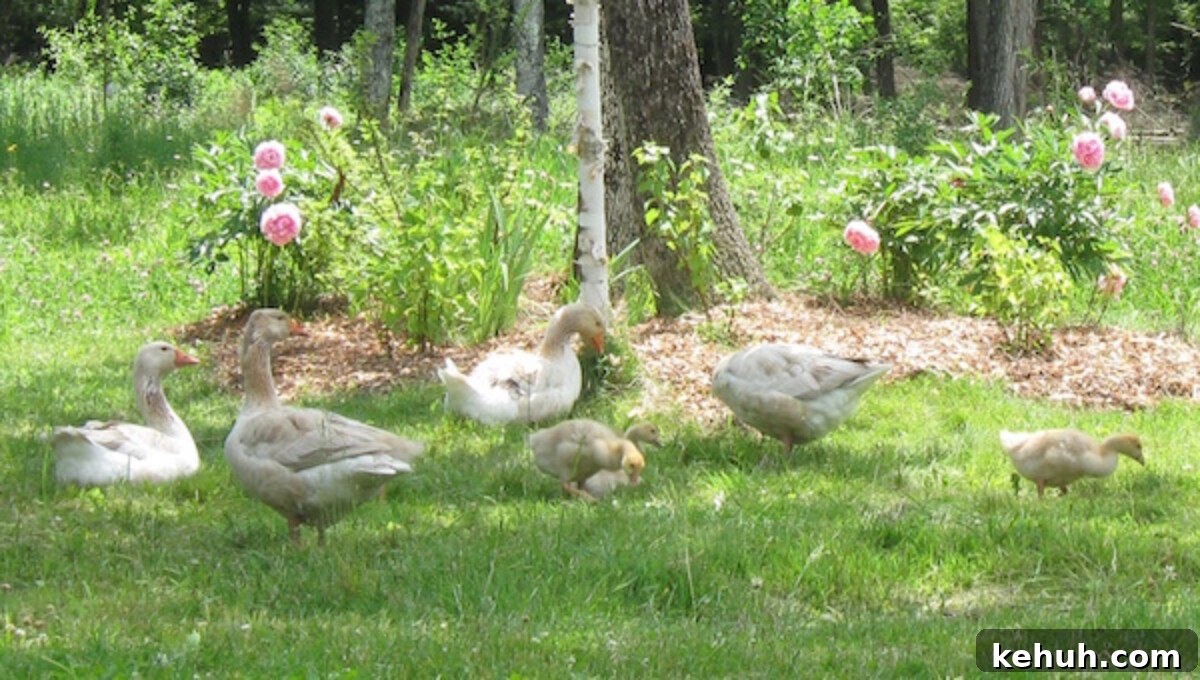
On our homestead we favor perennial systems—apples, pears, blueberries, many perennial vegetables, and mushrooms. Perennials thrive in low-disturbance, fungal-dominant soils, and wood chips speed that transition. Where soil is left to develop under wood chips, fungal decomposers replace bacterial-dominated cycles, creating the environment perennial roots prefer.
Applied around trees and perennial beds, wood chips suppress weeds, conserve moisture, and gradually increase fertility as they decompose—accelerating the establishment of resilient perennial ecosystems.
Using wood chips in annual gardens
Annual vegetables prefer more bacterial activity and some soil disturbance, so wood chips must be used thoughtfully. In many no-dig and Back-to-Eden approaches, chips are layered and allowed to compost on top of the soil, but our method adapts to our heavy, wet clay.
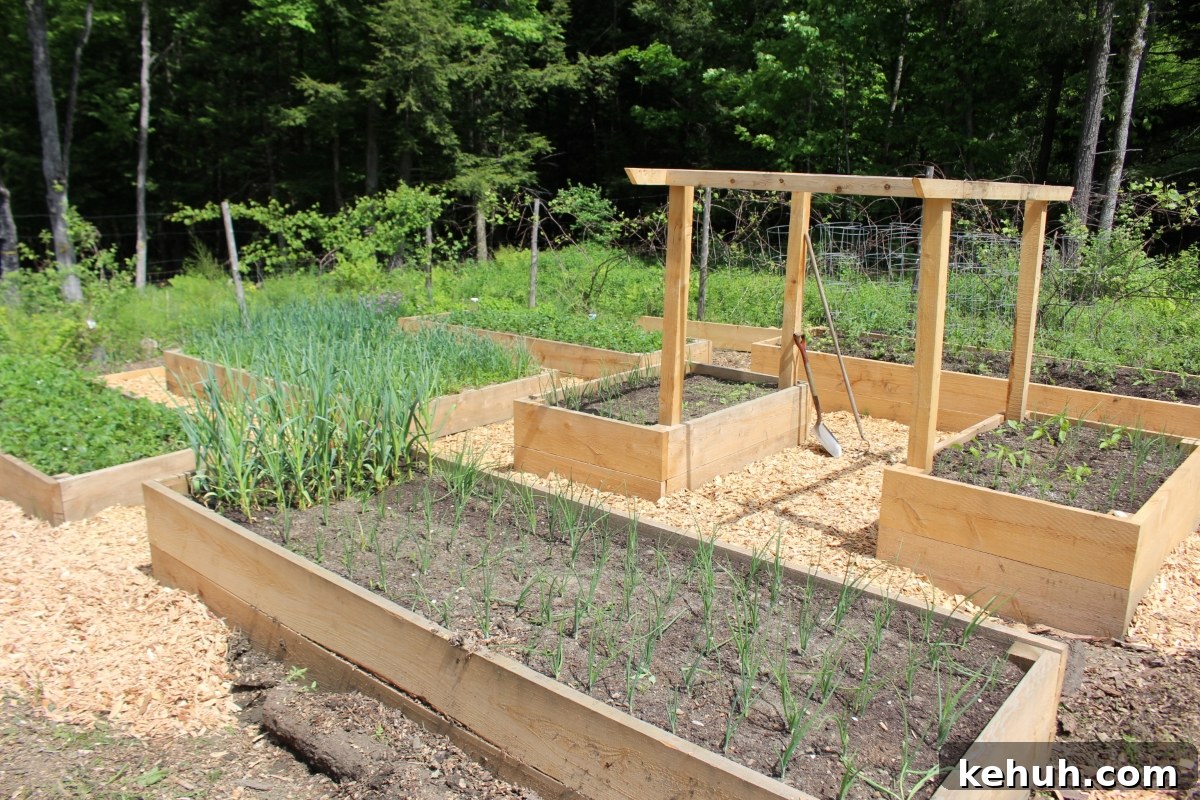
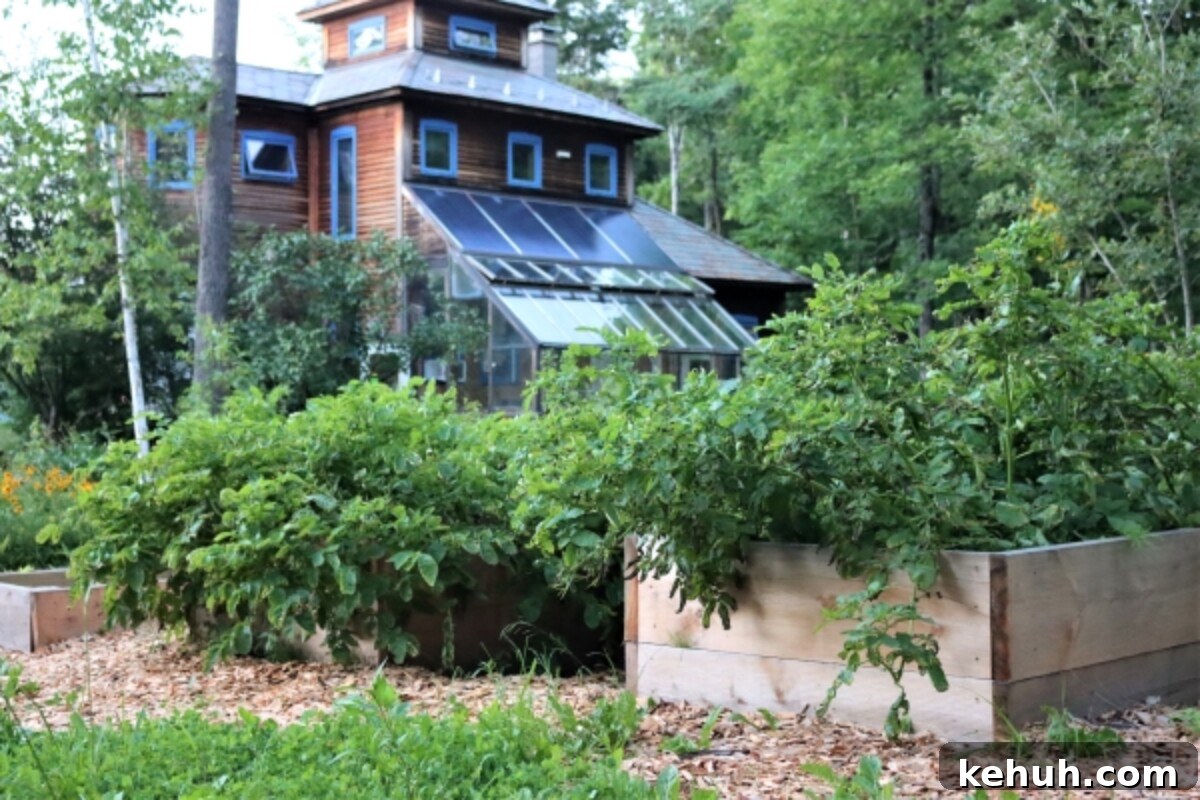
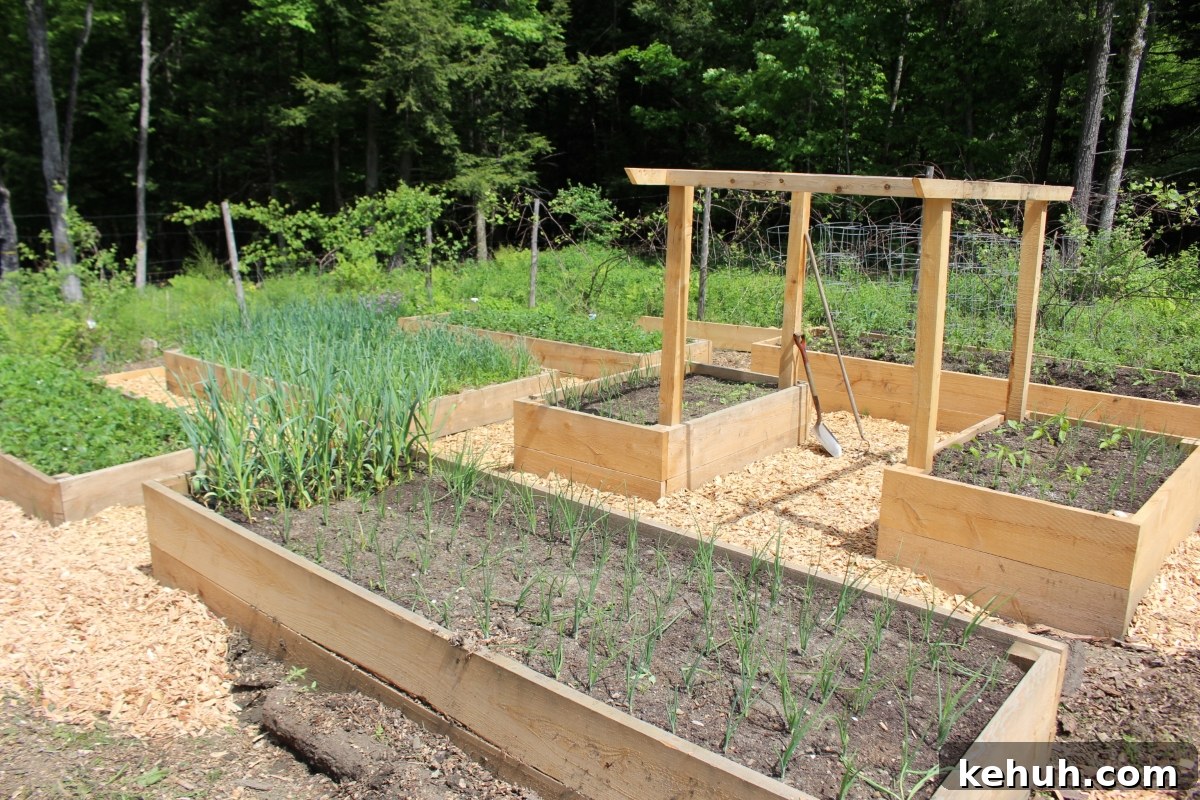
We build hugelkultur-style raised beds, two feet deep. The bottom 8–10 inches are filled with logs, branches, leaves, animal bedding shavings, and wood chips. This core wicks moisture, slowly breaks down to release nutrients, and generates heat in spring. We top the beds with compost and the excavated topsoil, and keep the surrounding paths mulched with fresh wood chips.
As the path chips decompose, we rake back the fresh layer and use the composted material beneath as a clean, weed-free mulch on the beds. This routine keeps our raised beds nearly weed-free with minimal effort: annual delivery of chips and an occasional top dressing of composted chips is all it takes.
Growing mushrooms with wood chips
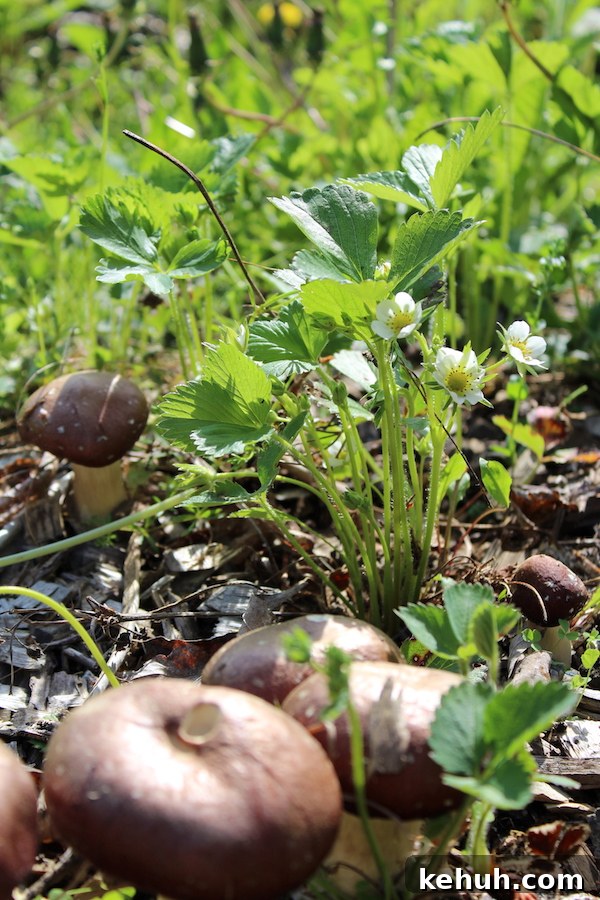
Wood chips are a natural substrate for many mushrooms. If you welcome fungi into your garden you can deliberately cultivate edible species. Wine cap mushrooms (Stropharia rugosoannulata) are an excellent choice for garden beds: they thrive in sunny conditions, are easy to identify, and pair well with strawberries and other beds.
If you pursue mushroom cultivation, learn reliable identification and safe cultivation techniques before consuming any wild or garden-grown fungi.
Downsides of wood chip gardening
Wood chips offer many benefits, but there are trade-offs and situations where they’re less appropriate.
Nitrogen binding
Fresh wood is high in carbon. As microbes decompose it they temporarily immobilize nitrogen in the surface layer. If chips remain on the surface this ties up nitrogen only in the top few millimeters and deters weed germination without harming established deeper-rooted plants. Avoid fine sawdust, which ties up much more nitrogen; coarser chip particles cause much less binding.
Germination
Seedlings have limited root depth and higher nitrogen needs. That’s why we favor composted wood chips as mulch on annual beds rather than fresh chips directly over newly sown or germinating seed.
pH
Fresh wood chips can temporarily raise soil pH, which affects acid-loving plants like blueberries. Using pine-based chips or applying an acidifying amendment at the time of first application prevents chlorosis and helps acid-loving plants adapt. Once chips begin decomposing, long-term pH shifts are minimal.
Runner-spreading crops
Thick chips suppress surface rooting and can inhibit the spread of low-growing runner crops such as cranberries, lingonberries, and lowbush blueberries. These plants perform better with lighter mulches or a mix of compost and sand that allows runners to take hold.
Allelopathy
Avoid chips from walnut and related species (juglone-producing) and from eucalyptus; both can suppress or harm many garden plants.
Labor
The biggest drawback is labor. Installing a deep layer of wood chips initially requires significant shoveling and spreading. The payoff is reduced maintenance in the seasons that follow, but be prepared for a hefty upfront investment in time and energy.
When not to use wood chips in the garden
Avoid fresh wood chip mulch around:
- Seedlings and high-nitrogen annuals (e.g., salad greens) until they’re established.
- pH-sensitive crops unless you pre-adjust soil acidity before the first application.
- Runner-spreading groundcovers that need to root across the surface, like cranberries and lingonberries.
Despite these limitations, wood chips improve yields and reduce maintenance in many garden settings—when applied thoughtfully they’re an excellent long-term strategy.
Where to get wood chips for gardening
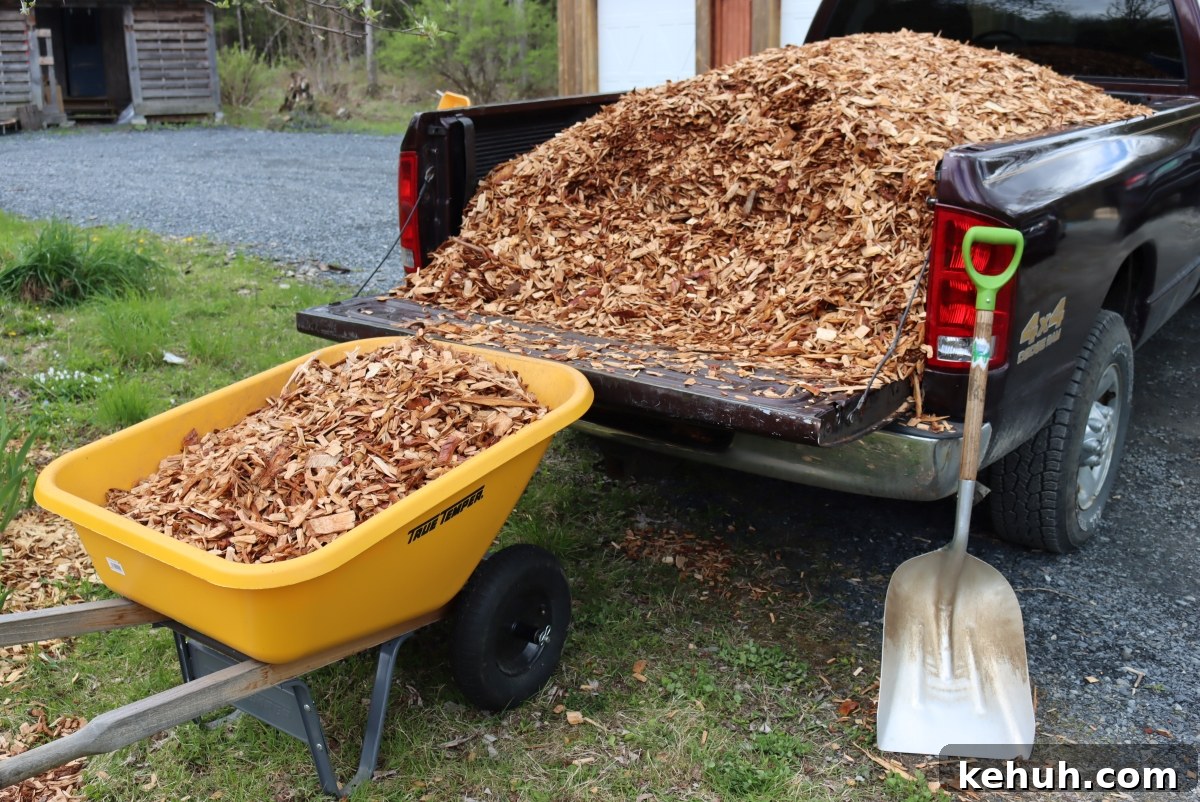
There are several sources for wood chips:
Make your own
If you have woodland, a small wood chipper is useful for chipping limbs and trimmings. Home models handle smaller branches; a larger PTO-driven or contractor-grade chipper processes thicker material and creates large volumes quickly. Producing your own chips gives you control over species and avoids contaminants.
Tree services and lumberyards
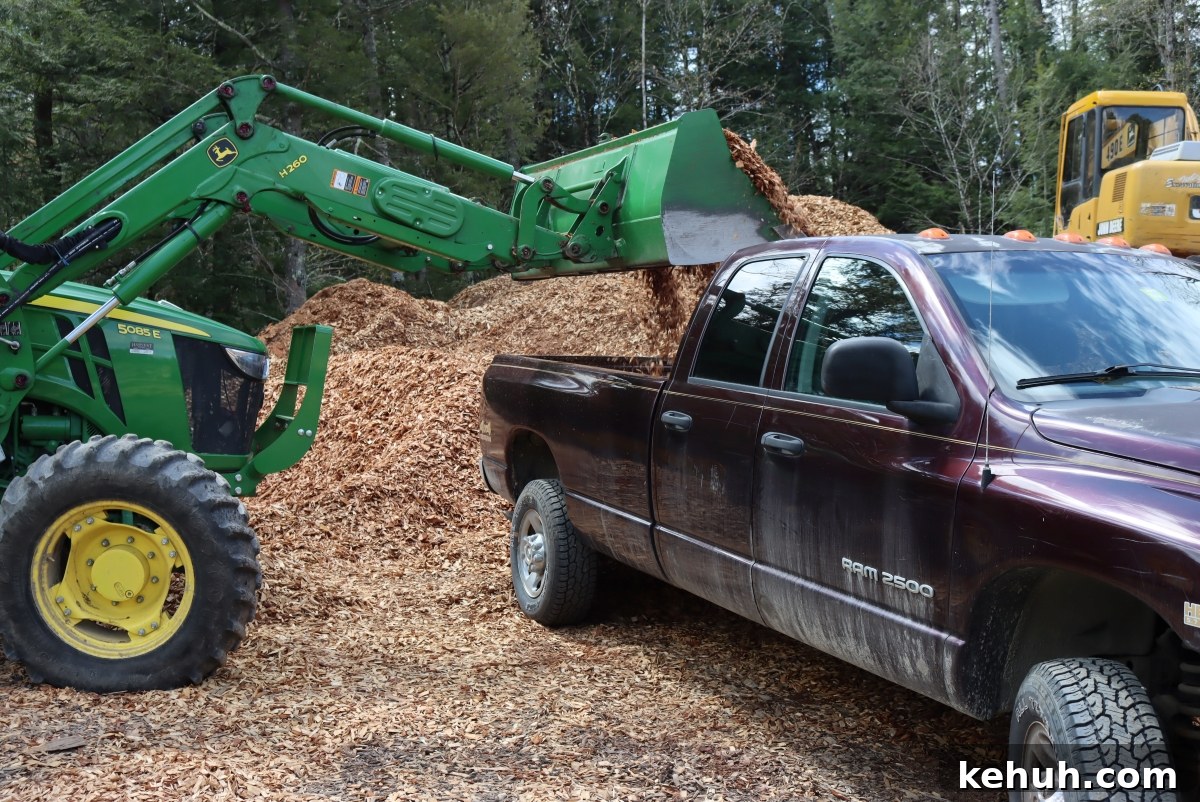
Many tree services deliver chips, sometimes for free, sometimes for a fee. Lumberyards and mills may sell clean chips by the yard. Confirm the source—avoid chips made from demolition waste or pressure-treated wood. Ask if the mill chips only local sawlogs to ensure clean material.
Troubleshooting wood chip gardening
Wood chip gardening can be straightforward—spread chips beneath trees and beds and wait—but some details matter. Tree species, chip particle size, and the part of the tree chipped (sapwood vs. heartwood vs. bark) influence how chips affect nitrogen, pH, and nutrient dynamics.
If issues arise—yellowing blueberry leaves from iron deficiency, for example—address them with targeted amendments such as acidifying fertilizers or pine bark and needles at the time of first chip application. As chips decompose, most initial problems diminish.
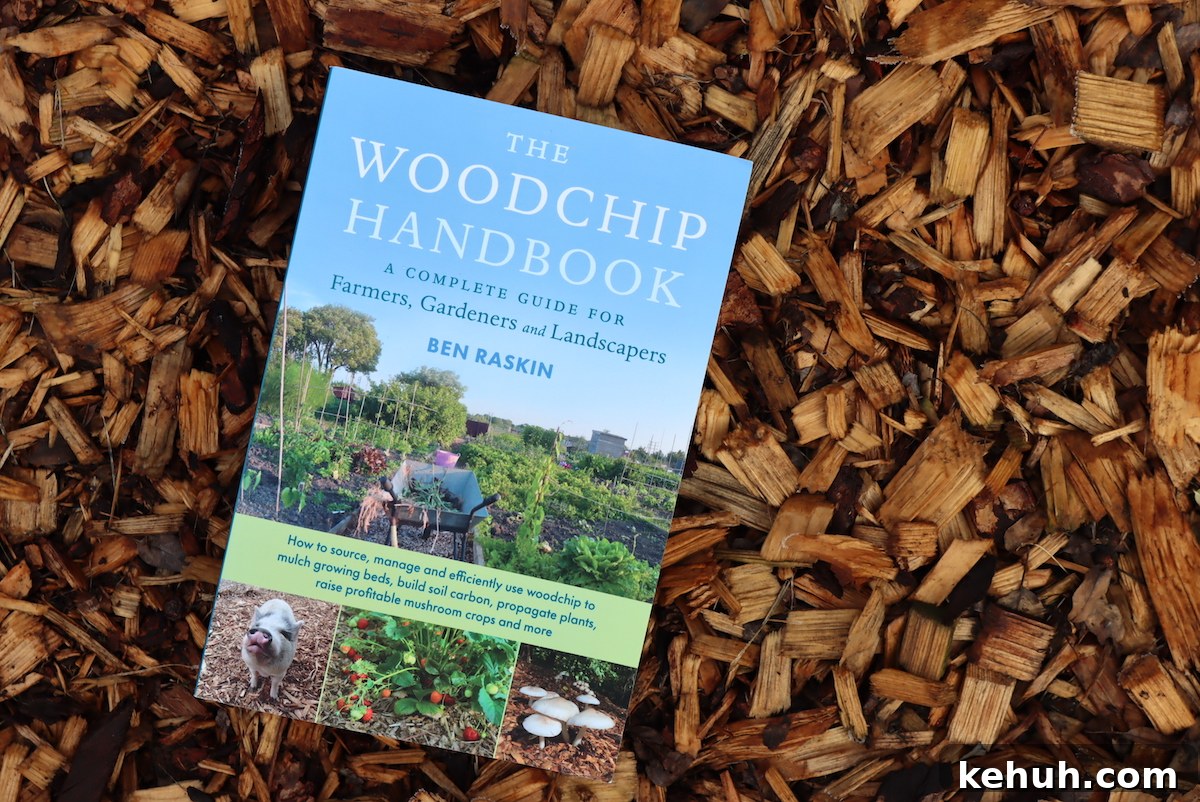
For deeper guidance on specifics and advanced troubleshooting, comprehensive resources on wood chip use and no-dig systems are worth consulting to match technique to your soil and plants.
Gardening guides
If you want to explore related topics, look for practical guides on cold-hardy fruits and nuts, perennial vegetables, and no-dig gardening approaches that pair well with wood chip strategies.