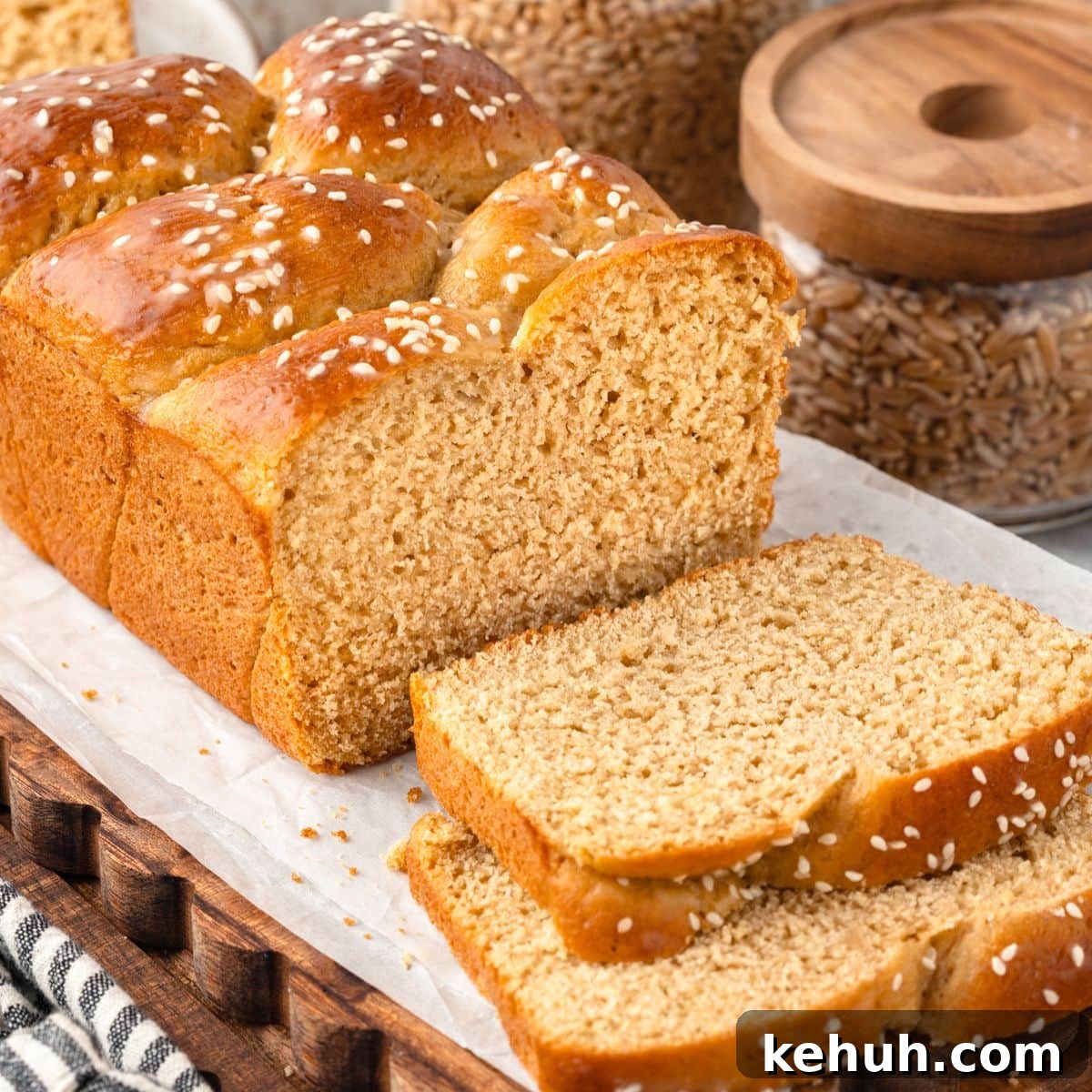
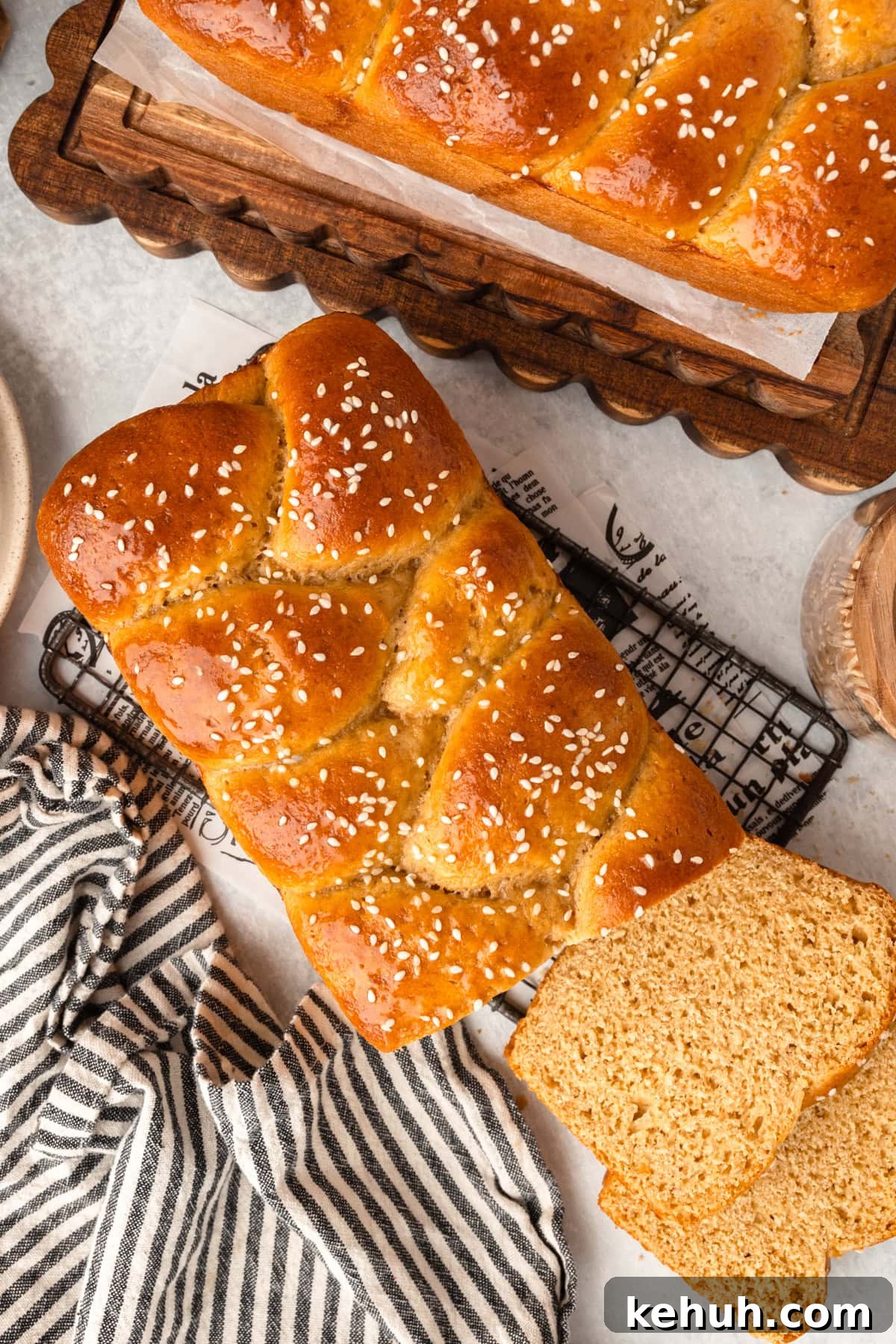
This 100% Khorasan wheat bread is my go-to sandwich loaf for family meals. Its rich, nutty, almost buttery flavor is far more interesting than standard white bread, and it bakes into stunning golden braided loaves that are both beautiful and delicious.
This recipe was developed using Khorasan wheat from Grand Teton Ancient Grains. I love the flavor of their khorasan flour, and all opinions here are my own.
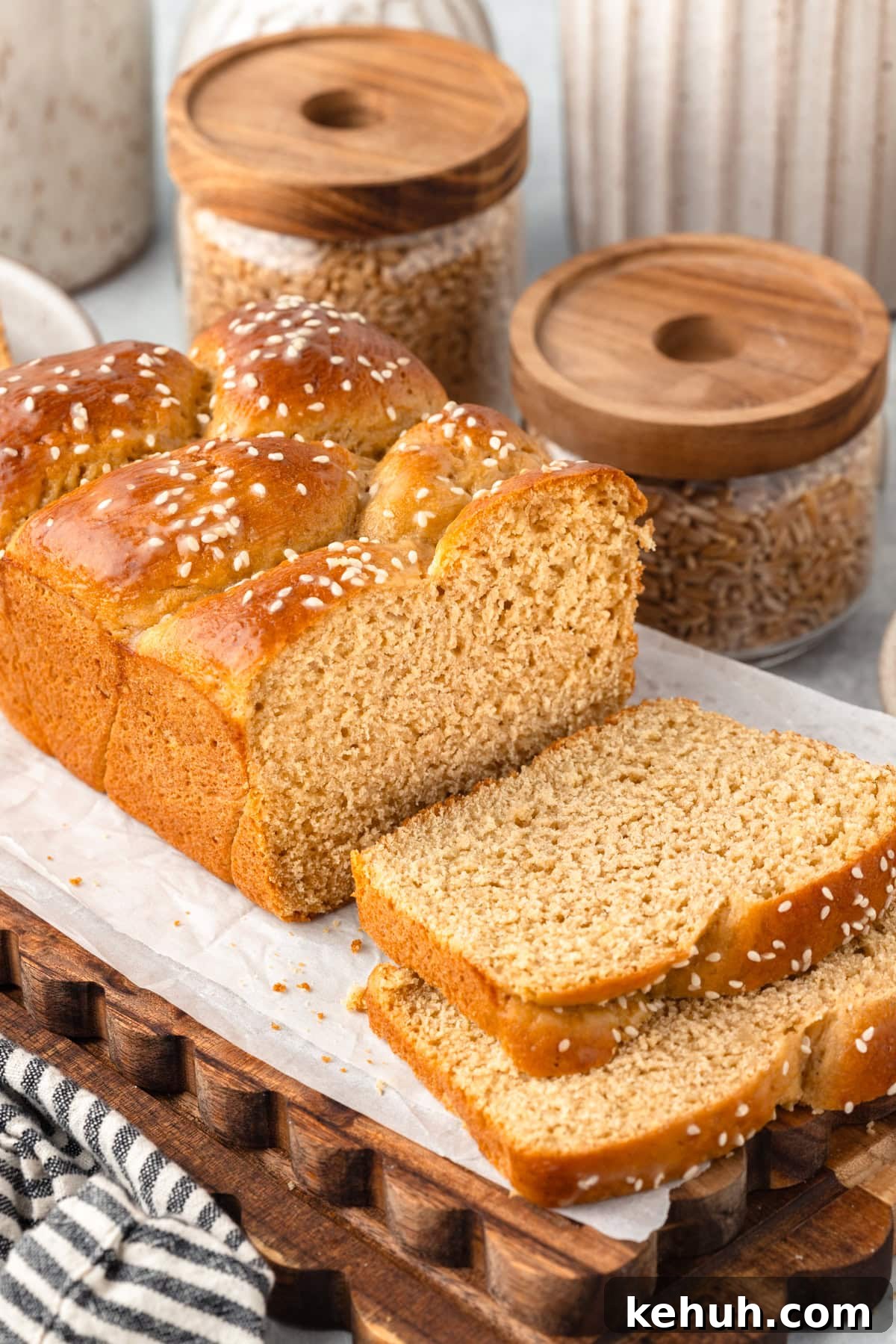
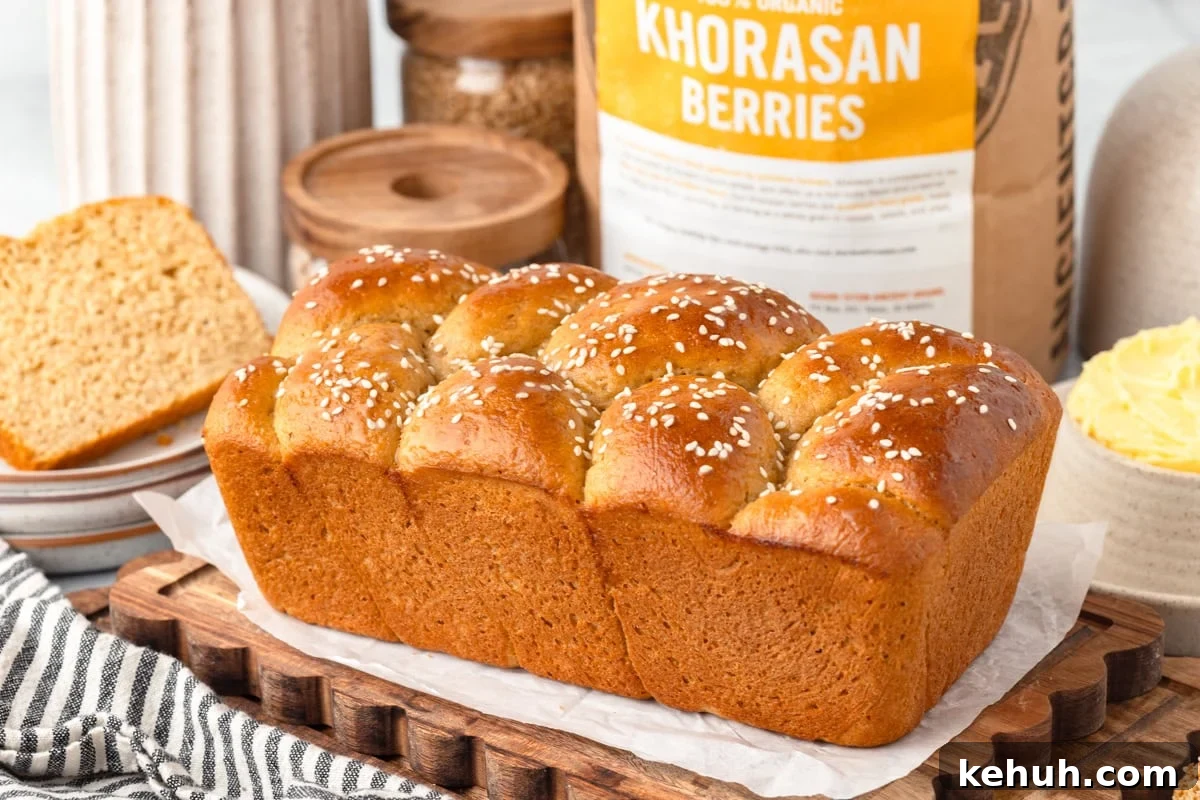
Baking bread at home feels special, and using ancient grains elevates the aroma and complexity of the loaf. Khorasan wheat—often sold under the trademarked name Kamut®—has a richer, nuttier profile than modern wheat. Kamut® is a brand name, while Khorasan is the grain’s true varietal name.
Because khorasan behaves a bit differently from modern wheat, it won’t rise as tall, but its flavor more than makes up for it. I use a loose braid to give the loaves extra lift and an attractive shape when working with 100% khorasan flour. Once you taste its natural buttery notes, ordinary bread won’t satisfy the same way.
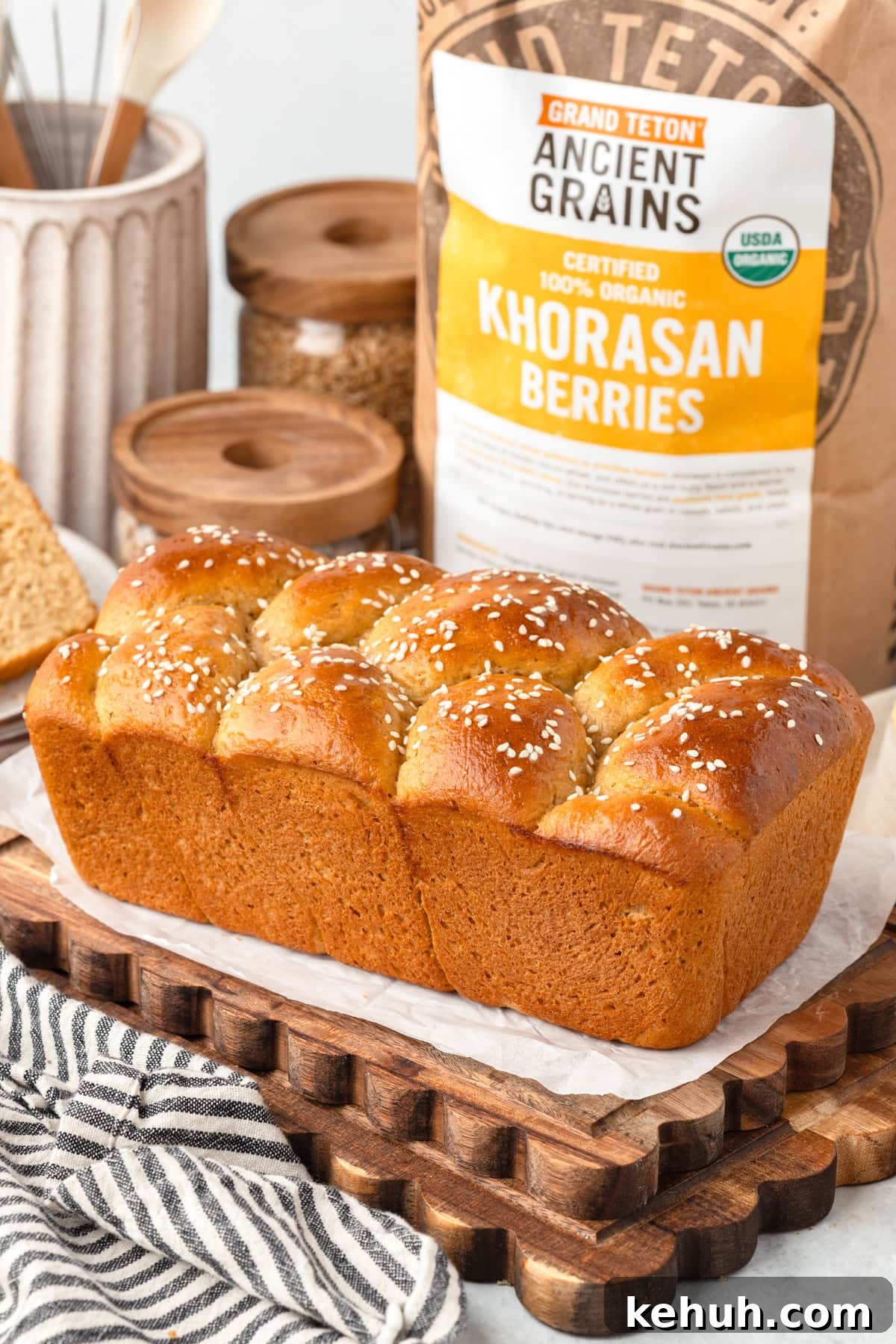
This khorasan bread recipe yields two golden braided loaves that work beautifully for sandwiches, toast, or alongside soups and salads. It’s a nourishing, family-friendly loaf with artisan quality—soft inside, crisp on the outside, and full of flavor.
Recipe Ingredients:
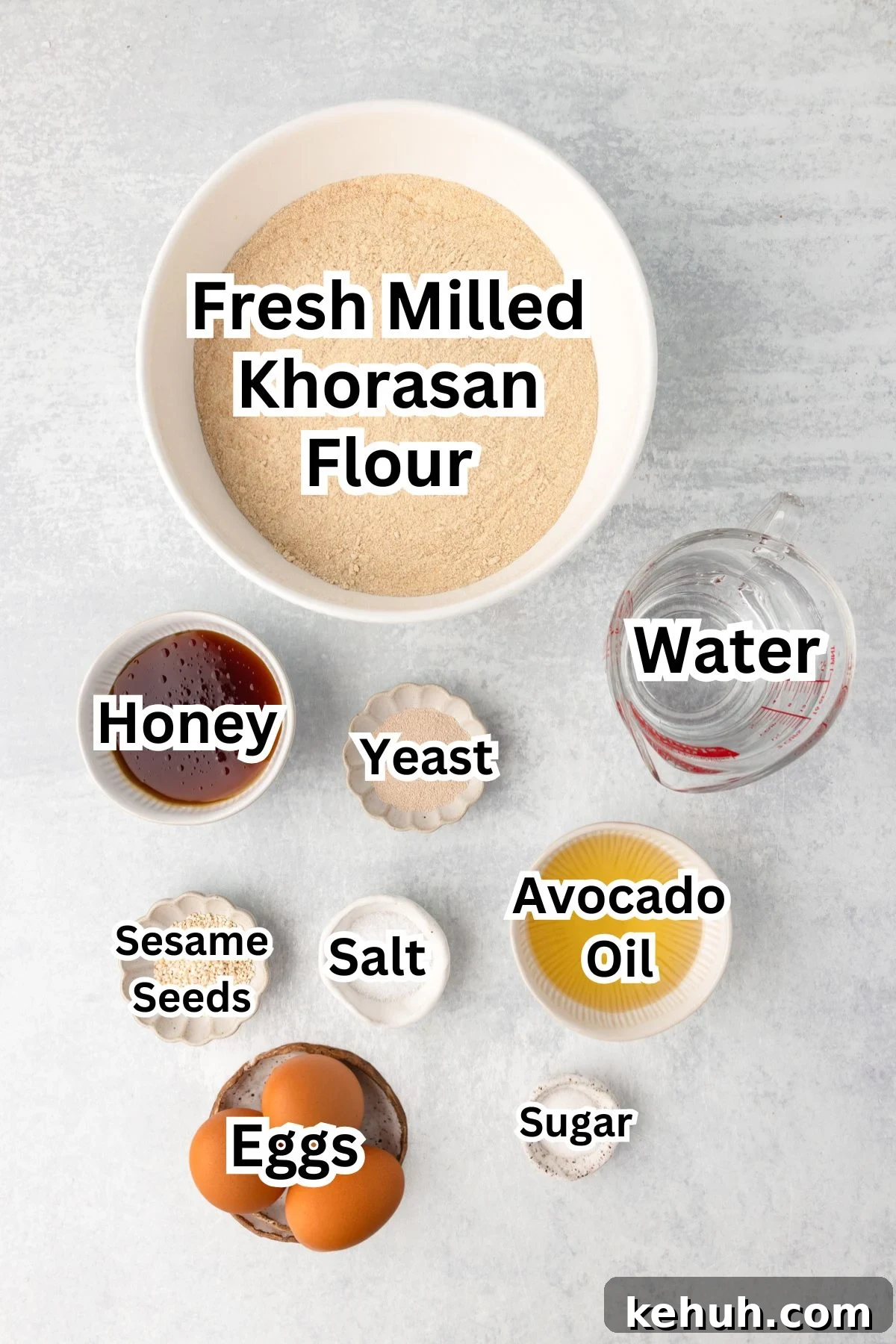
You’ll need the following to make two braided loaves:
- Fresh-milled Khorasan (khorasan) flour
- Warm water (105–115°F)
- Honey
- Avocado oil (olive oil works as a substitute)
- Eggs
- Active dry yeast
- White sugar
- Salt
- Sesame seeds (optional)
Ingredient Notes:
- Khorasan flour: Fresh-milled flour delivers the best flavor and nutritional benefit.
- Honey: Adds a gentle natural sweetness and complements the grain’s nutty notes.
- Avocado oil: Keeps the crumb moist and contributes mild, neutral fat; olive oil or melted butter may be used instead.
How to make 100% Khorasan Wheat Bread step-by-step:
Quick visual guides are included above; follow these steps for the full loaf. For a printable card, keep notes at the end.
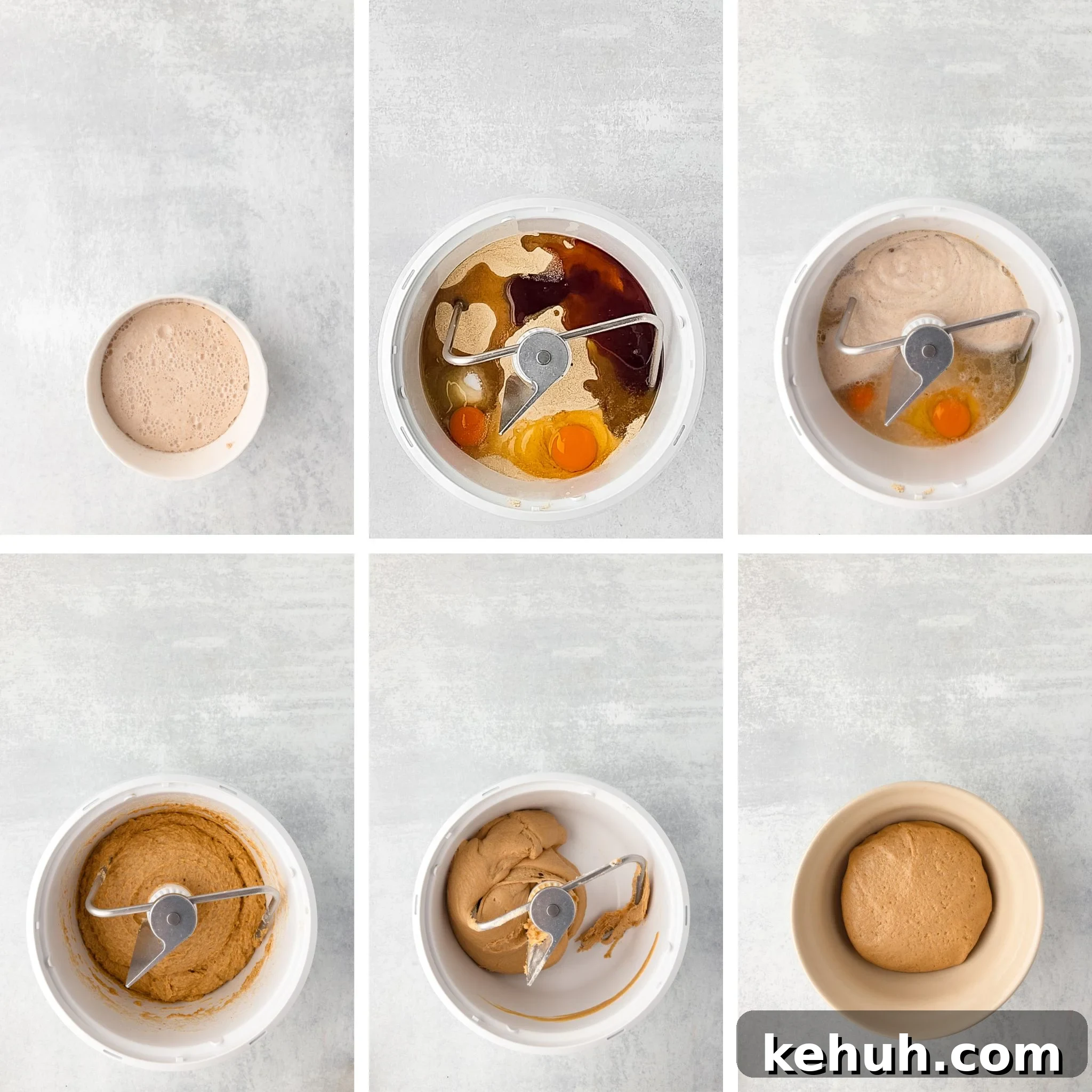
Step 1: In a small bowl, combine 1/4 cup of the warm water, the sugar, and the yeast. Let the yeast bloom 5–10 minutes until foamy.
Step 2: In a large mixing bowl (or in a stand mixer bowl), combine the khorasan flour, the remaining 1 3/4 cups warm water, honey, avocado oil, the eggs, salt, and the bloomed yeast mixture. Mix until the dough just comes together; it will be loose rather than fully smooth.
Step 3: Let the dough rest 15 minutes so the flour hydrates.
Step 4: Knead the dough until smooth and elastic—10–12 minutes in a Bosch mixer on speed 2, or 13–15 minutes by hand.
Step 5: Place the dough in a greased bowl, turning once to coat. Cover and let rise in a warm place for about 1 hour, or until doubled.
Step 6: Punch down the dough and divide it into two equal halves.
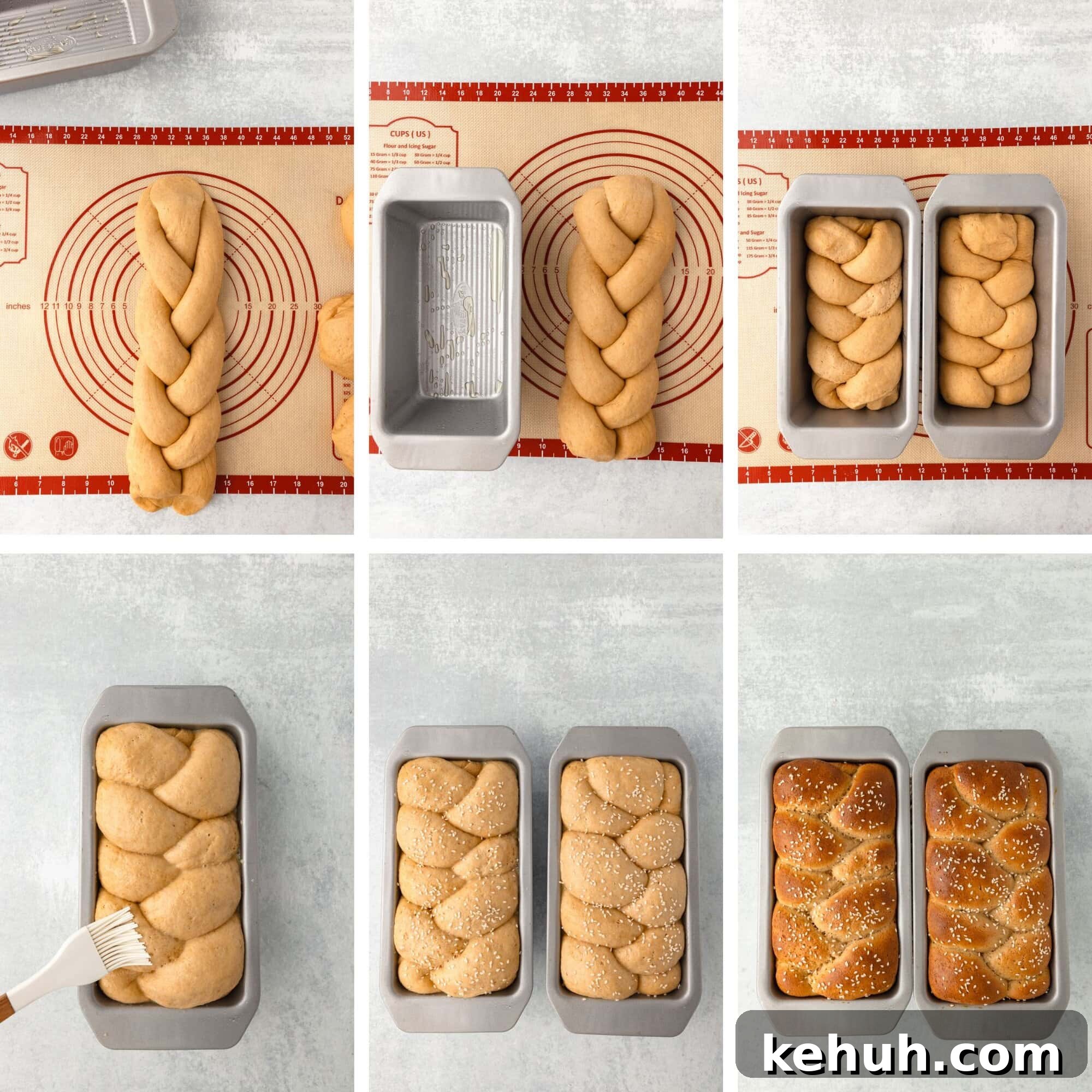
Step 7: For each half, divide into three equal pieces and roll each piece into a rope about 12 inches long.
Step 8: Braid the three ropes loosely, tuck the ends under, and place each braid into a greased 8×4-inch loaf pan.
Step 9: Cover the pans loosely and let the loaves rise 45–75 minutes in a warm spot, until very puffy and about 1 inch above the pan rim.
Step 10: Preheat the oven to 350°F. Brush the loaves with an egg wash (1 whole egg plus 1 tablespoon water) and sprinkle sesame seeds if you like.
Step 11: Bake 28–32 minutes, until golden brown and hollow-sounding when tapped, or until the internal temperature reaches 190–195°F.
Step 12: Cool the loaves in the pans for 10 minutes, then transfer them to a wire rack to cool completely. For a glossy finish, brush the hot loaves with a little butter right after they come from the oven.
Note: Braiding is optional—if you prefer, shape the dough into standard loaves. I braid mine for the extra visual lift and texture.
The key to excellent ancient-grain bread is correct hydration: you don’t want the dough overly sticky or too dry. This recipe uses slightly less hydration than many modern wheat recipes to keep the dough manageable for braiding while still producing a soft crumb.
Storage and Reheating:
Storage: Store fully cooled loaves in an airtight container or bread bag at room temperature for 3–4 days.
Reheating: Refresh day-old slices in a toaster, or warm a whole loaf wrapped in foil at 300°F for about 10 minutes.
Freezing: Wrap cooled loaves tightly in plastic wrap and foil, and freeze up to 3 months. Thaw at room temperature or slice while frozen for toast.
Additions and Substitutions:
Additions:
- Seeds: Sunflower, pumpkin, or mixed seeds kneaded into the dough add flavor and texture.
- Herbs: Fresh rosemary or dried herbs for a savory loaf to accompany dinners.
- Dried fruit: Raisins, cranberries, or chopped dates fold in nicely for a subtly sweet bread.
- Nuts: Chopped walnuts or pecans pair well with the grain’s inherent nuttiness.
Substitutions:
- Honey: Maple syrup or brown sugar can substitute, though honey complements khorasan particularly well.
- Avocado oil: Olive oil or melted butter works as alternatives.
- Fresh-milled flour: Other freshly milled flours will work, but the distinct khorasan flavor will be reduced.
FAQs about this Braided Bread Recipe:
What is Khorasan flour?
Khorasan is an ancient wheat variety noted for its rich, buttery flavor and relatively high protein content. It’s commonly sold as Kamut®, but khorasan is the grain’s actual name—excellent for artisan-style breads.
How do I know when my bread is done?
The loaves should be deeply golden on top and sound hollow when tapped on the bottom. An instant-read thermometer should register 190–195°F in the center.
Can I make this without a mixer?
Yes—hand kneading works well. Expect about 13–15 minutes of kneading until the dough becomes smooth and elastic.
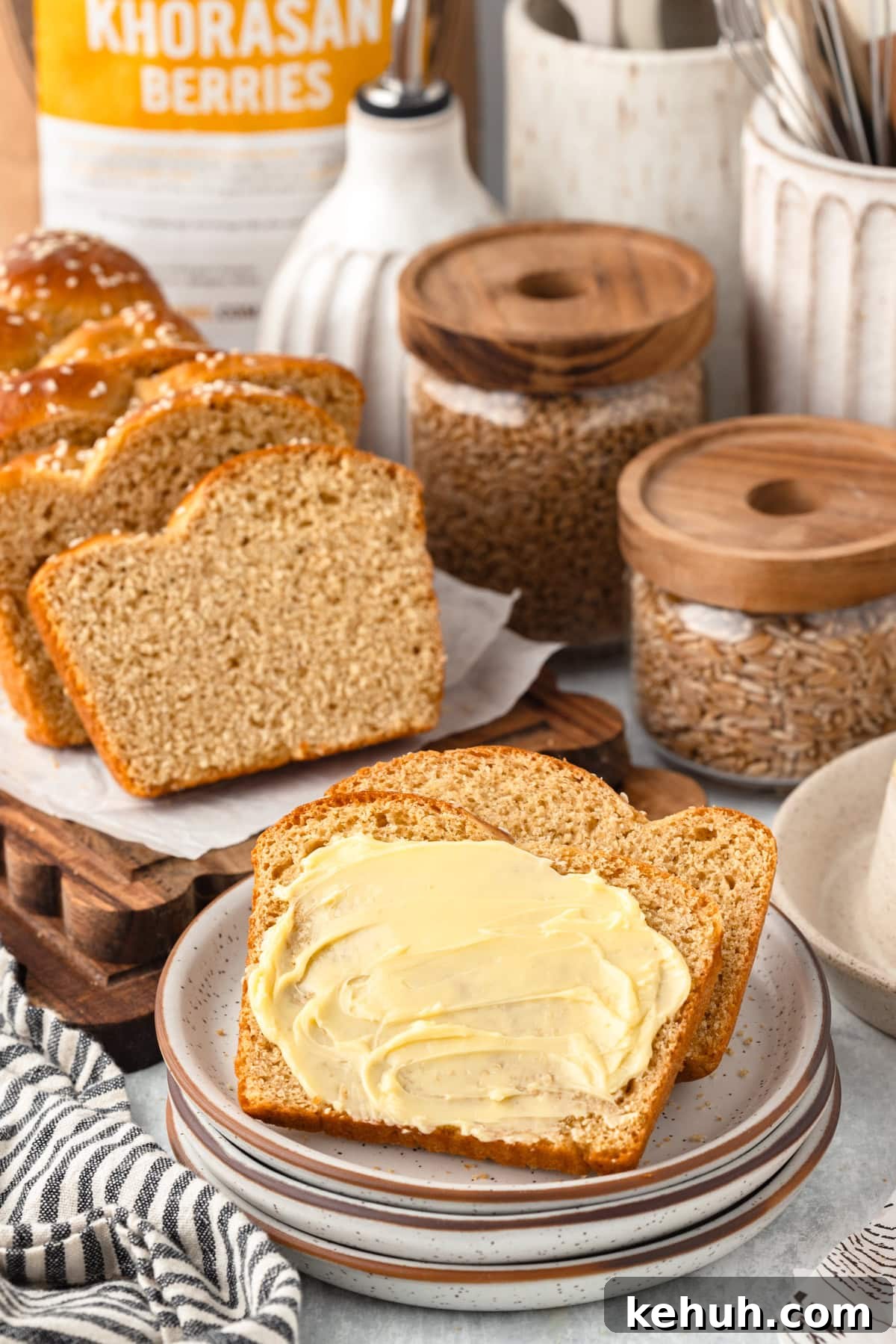
What to serve with this Ancient Grains Bread
This loaf makes excellent sandwiches, toast with butter and jam, or accompaniment to soups and salads. It also toasts beautifully for breakfast and makes outstanding French toast.
DID YOU MAKE THIS RECIPE?

I’m excited for you to try this Khorasan wheat bread. If you make it, please leave a rating and share how it turned out—I’d love to hear if your family enjoyed it as much as mine. Find us on IG + TikTok: @littlechefwithin
100% Khorasan Wheat Bread
Vicky Hadley ~ Little Chef Within
Pin Recipe
Equipment
-
2 — 8×4 inch bread pans
Ingredients
- 6 1/4–6 1/2 cups fresh-milled Khorasan flour
- 2 cups warm water 105–115°F, divided
- 1/3 cup honey
- 1/3 cup avocado oil
- 2 large eggs
- 1 package (2 1/4 teaspoons) active dry yeast
- 1 teaspoon white sugar
- 2 teaspoons salt
- 1 whole egg + 1 tablespoon water for egg wash, optional
- sesame seeds optional
Instructions
- In a small bowl, combine 1/4 cup of the warm water, the sugar, and the yeast. Let bloom 5–10 minutes until foamy.
- In a large mixing bowl (or Bosch bowl), combine khorasan flour, remaining 1 3/4 cups warm water, honey, oil, eggs, salt, and the bloomed yeast mixture. Mix until dough just comes together (loose, not smooth).
- Let the dough rest 15 minutes to hydrate.
- Knead: Bosch mixer on speed 2 for 10–12 minutes, or by hand 13–15 minutes, until smooth and elastic.
- Place dough in a greased bowl, turning to coat. Cover and let rise in a warm place about 1 hour, or until doubled.
- Punch down and divide into two equal halves.
- For each half, divide into three pieces and roll each into a 12-inch rope.
- Braid loosely, tuck ends under, and place in greased 8×4 loaf pans.
- Cover and let rise 45–75 minutes, until very puffy (about 1 inch above pan rim).
- Preheat oven to 350°F. Brush with egg wash and add seeds if desired.
- Bake 28–32 minutes until golden brown and hollow-sounding or 190–195°F internal temperature.
- Cool 10 minutes in pans, then transfer to a wire rack to finish cooling.
Notes
Nutrition
Carbohydrates: 59 g
Protein: 2 g
Fat: 36.6 g
Sodium: 2328.6 mg
This post contains affiliate links and we may earn a commission on purchases made through them. Thank you for your support.