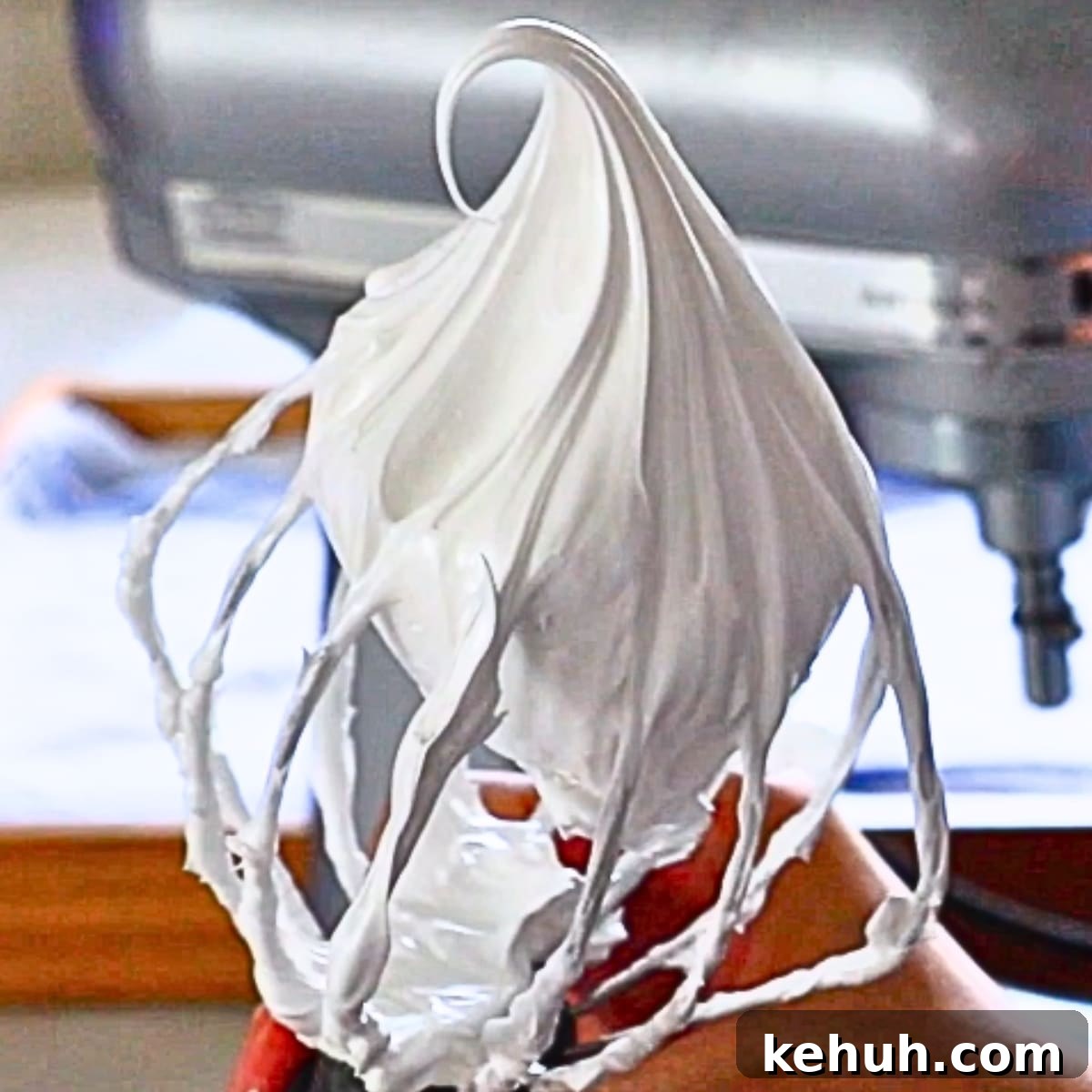
Learn how to make the perfect Swiss meringue for many desserts. This guide includes clear steps and essential tips to achieve a smooth, stable Swiss meringue every time.
Why You’ll Love This Recipe
- Simple and reliable – Follow five clear steps and use just two ingredients to make a smooth, stiff meringue.
- Versatile – Use this Swiss meringue for Swiss meringue buttercream, meringue cookies, macarons made with the Swiss method, tarts, mousses and more.
- Practical tips – This post compiles important tips and troubleshooting advice so you can make Swiss meringue at home with confidence.
What is Swiss Meringue?
Swiss meringue is made by gently heating egg whites and sugar in a water bath and then whipping them. Heating the mixture creates a firmer, more stable meringue that holds its shape longer than an uncooked (French) meringue.
How is Swiss meringue different from other types of meringue?
1. Italian meringue
Italian meringue uses hot sugar syrup (about 244°F / 118°C) poured into whipped egg whites. It is very stable and commonly used in mousses, lemon meringue tart, meringue cakes and similar desserts.
2. French meringue
French meringue is made by whipping raw egg whites and sugar without heating. It is the simplest to prepare but the least stable, making it best for baked meringue cookies, chiffon cake batters, and recipes where the meringue will be baked right away.
8 Tips For Perfect Swiss Meringue
- Keep equipment spotless and dry – Any oil or moisture will prevent egg whites from whipping fully. Separate eggs carefully to avoid yolk contamination.
- Use a gentle water bath – Heat the egg whites and sugar slowly over simmering water. The bowl should not touch the water directly to avoid cooking the eggs.
- Stir constantly and scrape the bowl – Move the whisk around the bowl so no portion of the mixture overheats or cooks.
- Heat to about 160°F (71°C) – This temperature produces a firm, stable meringue. Heating less yields a looser meringue; overheating can produce a grainy texture from cooked proteins.
- Use a candy thermometer – A thermometer gives the most reliable reading. Alternatively, the mixture should feel smooth to the touch with no grainy sugar.
- Whip while warm – Egg whites expand most when still warm. Begin whipping immediately after removing from the water bath.
- Stop when cooled to room temperature – Over-whipping as the meringue cools can cause volume loss; stop when the bowl or meringue feels near room temperature.
- Use immediately – Swiss meringue firms up as it rests and is difficult to remix; it’s best used right away for fillings, frostings, or piping.
VIDEO: Watch How To Make the Swiss Meringue!
Follow the step-by-step video tutorial to see each stage of the process and better understand the techniques described below.
Don’t forget to subscribe for more baking videos!😉
2 Simple Ingredients to Make Swiss Meringue
- Egg whites: Make sure they contain no yolk or other contaminants. Pasteurized egg whites are recommended for food safety. Save yolks for other uses like buttercream or pastry cream.
- Granulated sugar: Use white granulated or caster sugar for best results.
5 Steps To Make Swiss Meringue
Preparation
- Separate the eggs, ensuring no yolk gets into the whites.
- Bring water to a gentle simmer in a saucepan to create a double boiler.
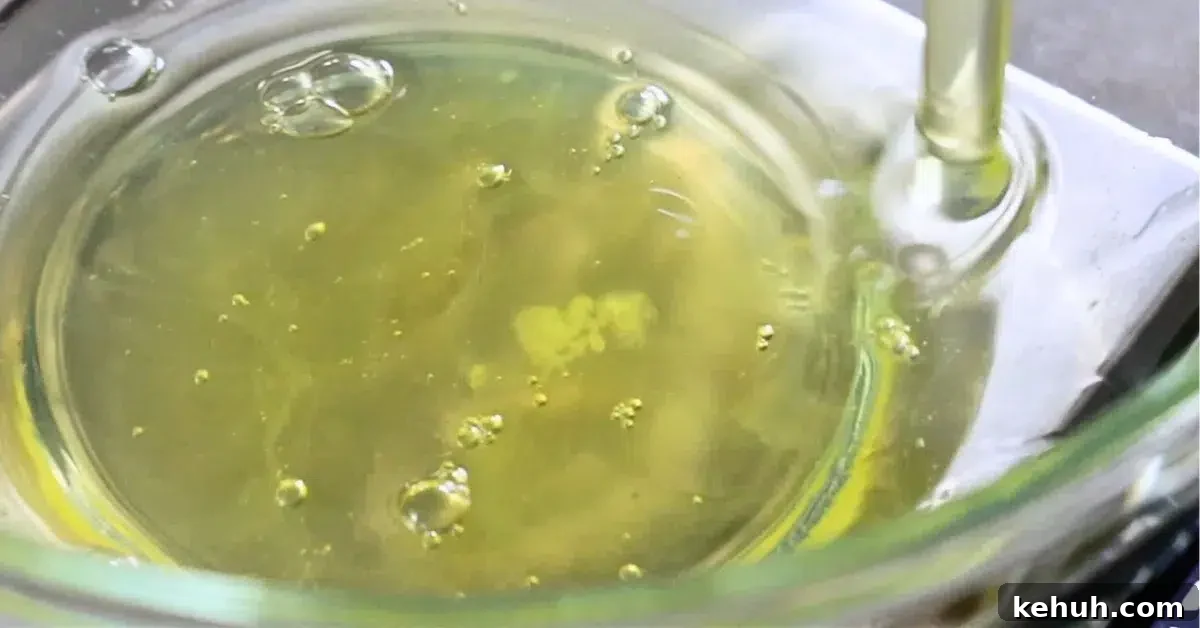
Heat egg whites and sugar
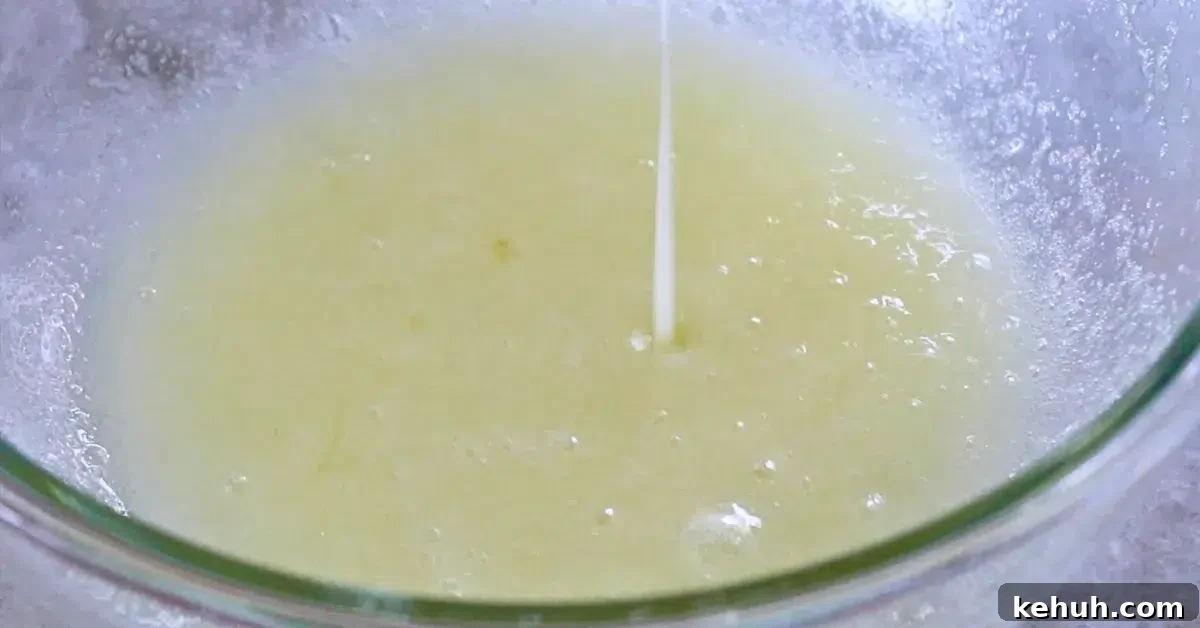
- Step 1: Combine egg whites and sugar in a large bowl and begin whisking by hand or with a whisk attachment.
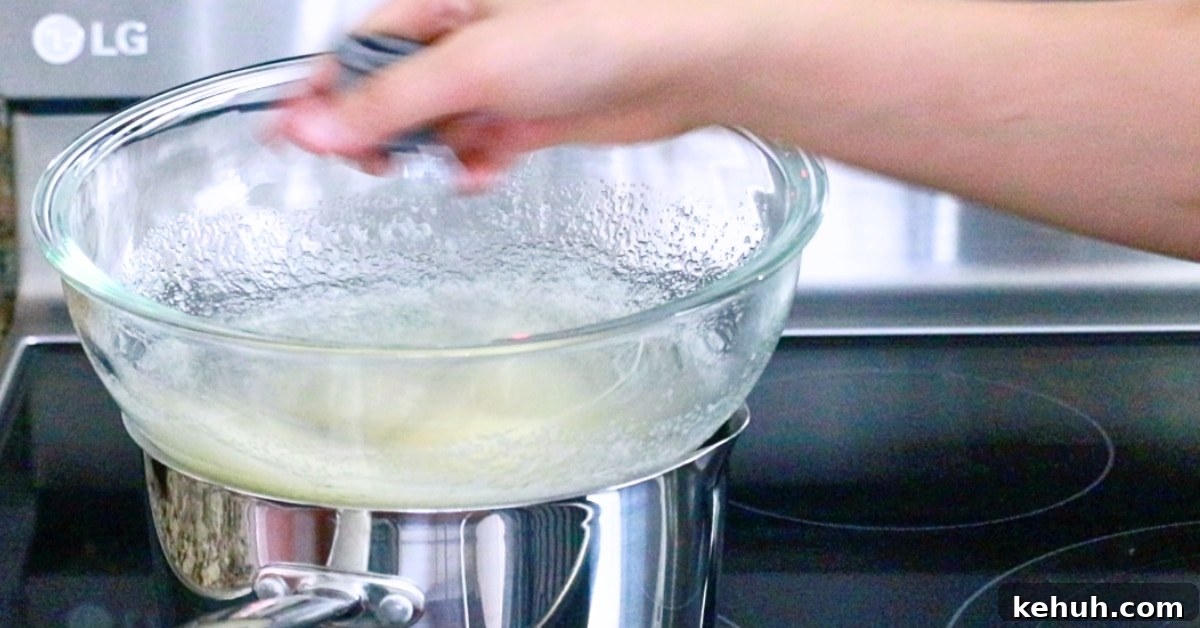
- Step 2: Place the bowl over the simmering water and heat the mixture while whisking constantly. Remove from the heat as soon as it reaches 160°F (71°C).
Whip the egg white mixture
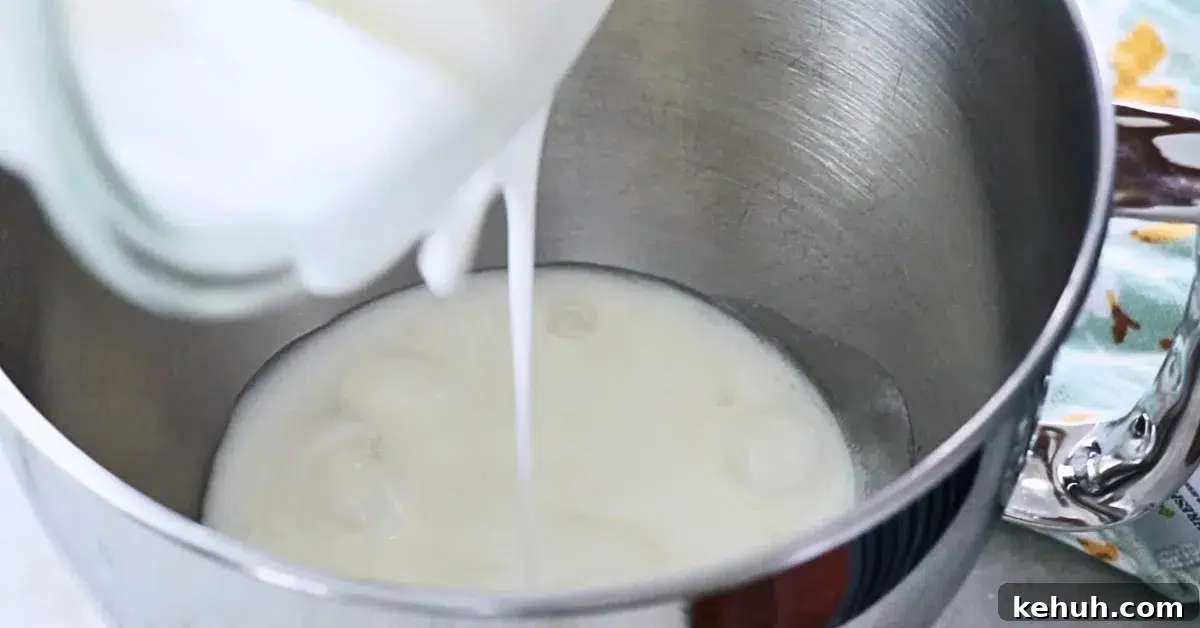
- Step 3: Dry the bottom of the bowl to remove steam. Transfer the mixture to a stand mixer bowl and immediately start whipping at high speed with a whisk attachment.
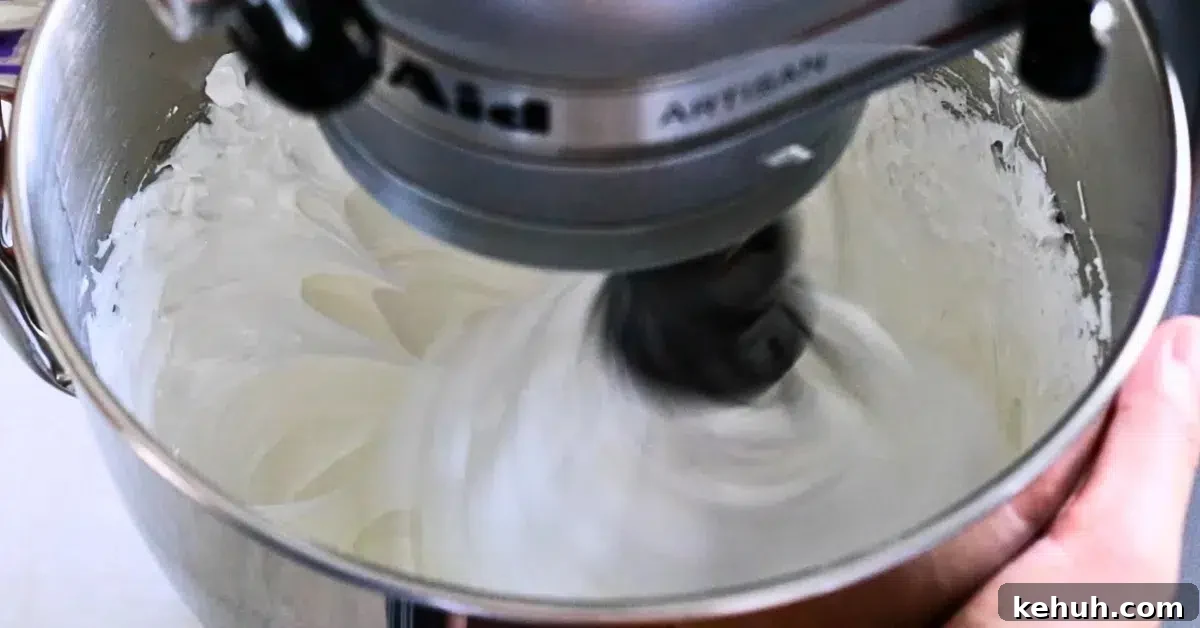
- Step 4: As the meringue cools, reduce speed in stages. When the bowl feels comfortably warm, lower to medium; when slightly warm, lower to low–medium.
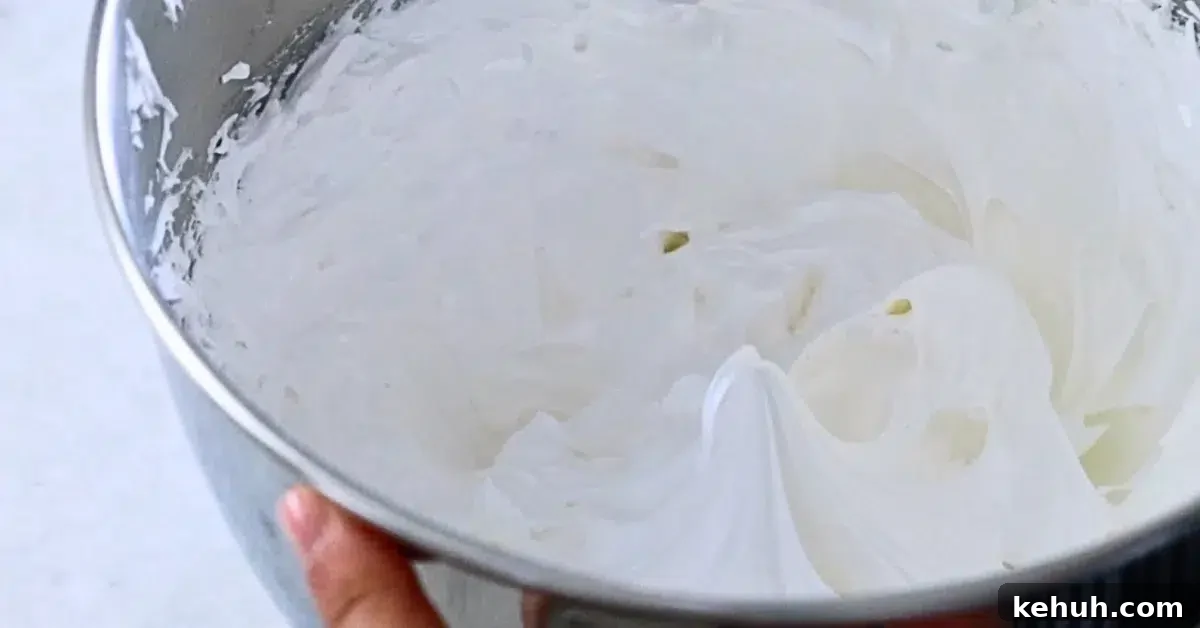
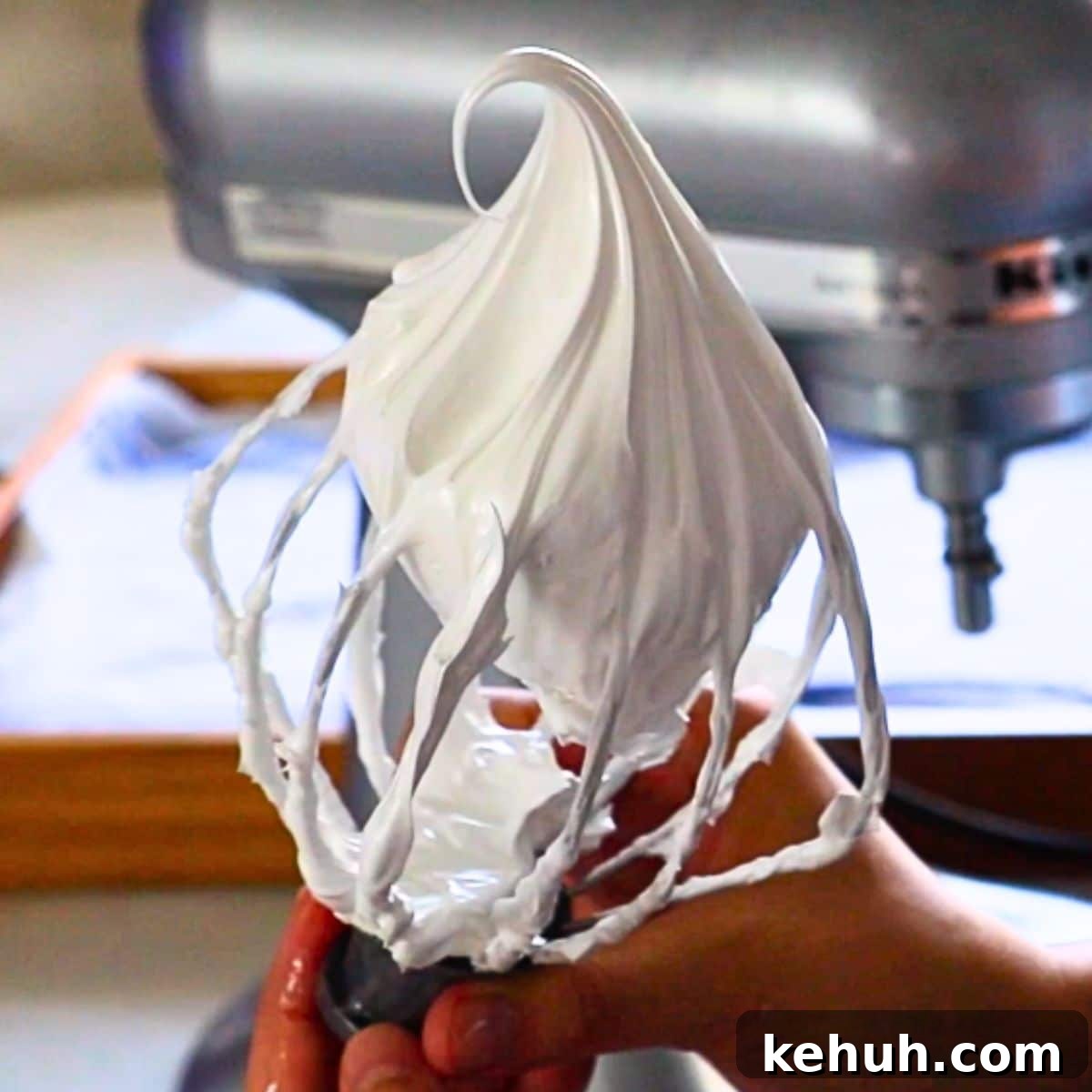
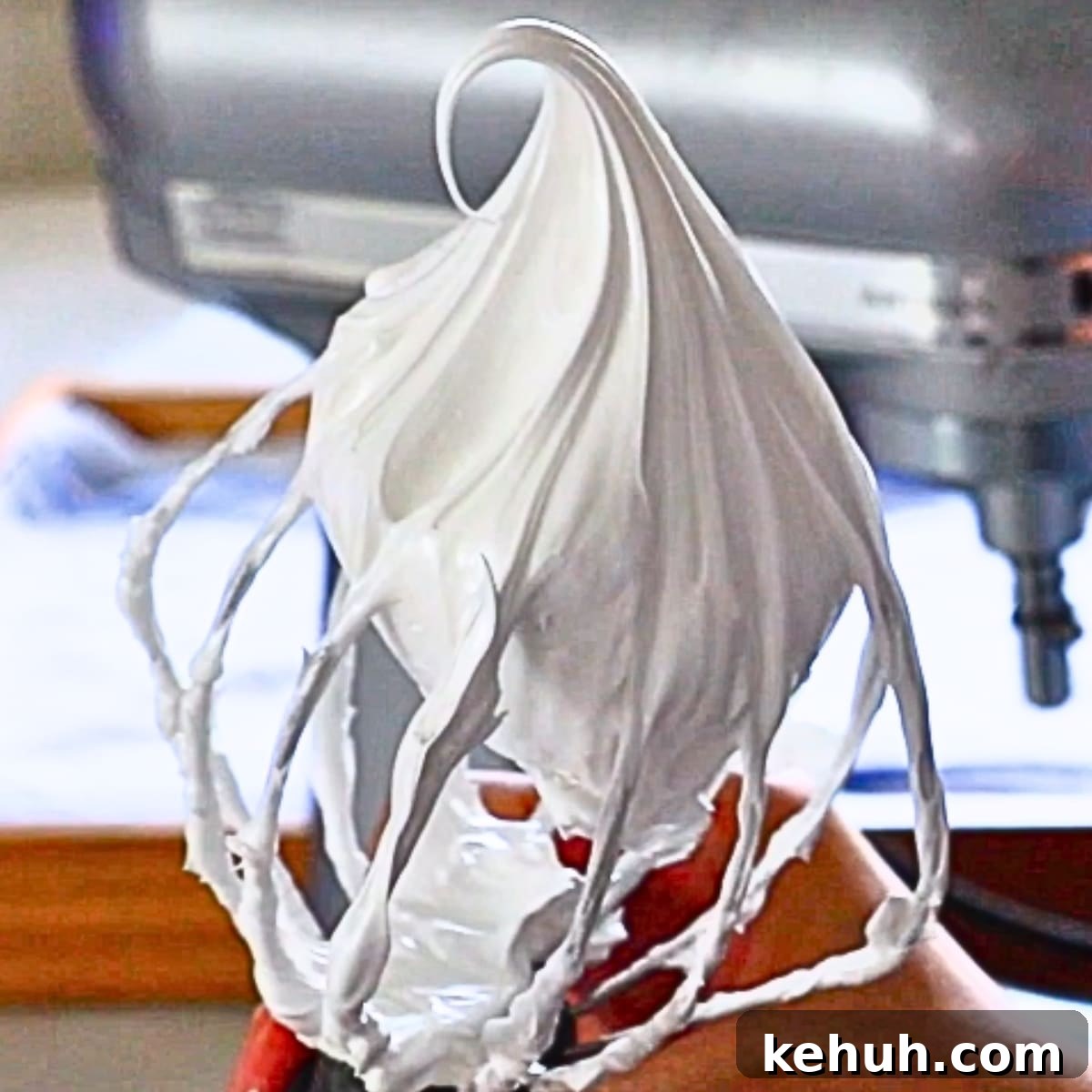
- Step 5: Stop whipping when the meringue and bowl are near room temperature. Use immediately. The finished meringue should be stiff, elastic and glossy; the tips will curl when lifted with a whisk.
The meringue should form glossy, curling peaks when lifted with a whisk.
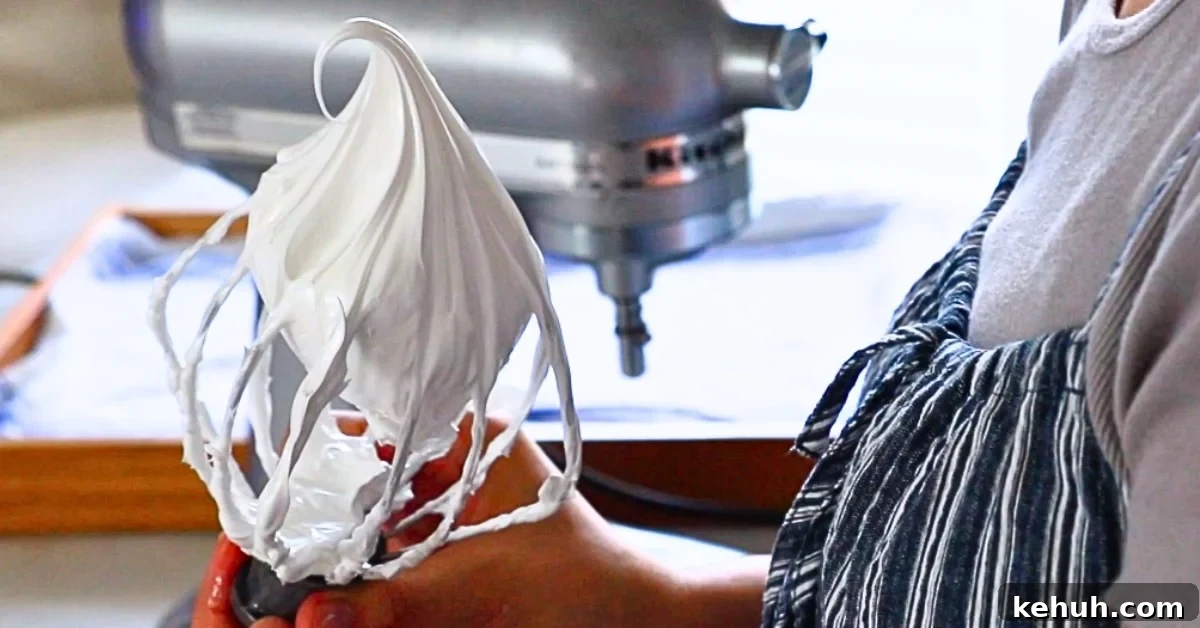
Why is the Swiss meringue loose?
- Underheated: The mixture may not have reached the target temperature, producing a looser meringue.
- Contamination: Oil or liquids from yolk or greasy tools can stop whites from whipping properly.
- Delayed whipping: If the heated mixture cools before whipping, it won’t expand as much.
- Over-whipping: Whipping past room temperature can cause the meringue to lose volume.
Why is my Swiss meringue grainy?
Graininess results from partially cooked egg whites or undissolved sugar. Keep the mixture moving and avoid direct contact between the bowl and boiling water. Stir evenly and test by rubbing a bit between your fingers—when smooth, the sugar has dissolved.
Uses for Swiss Meringue
Swiss meringue is useful in many desserts, including:
- Swiss buttercream: Whip butter into Swiss meringue for a stable, silky buttercream ideal for cakes and cupcakes.
- Meringue cookies: Swiss meringue produces glossy, crisp cookies that are less fragile than those made with French meringue.
- Toppings for tarts and pies: Pipe or spread a billowy meringue on fruit tarts, pies, or chocolate desserts and torch lightly for color.
- Decorations: Pipe shapes for plated desserts or cake decorations; Swiss meringue holds piped detail well.
- Swiss-method macarons: Macarons made using the Swiss technique are glossy and attractive, though slightly sweeter than other methods.
- Frosting for layer cakes: Use it to frost cakes; torching adds color and flavor contrasts (classic example: Baked Alaska).
- Mousse: Swiss meringue creates a stable mousse with a slightly denser texture than mousse made with Italian meringue.
Frequently Asked Questions
Yes. Cakes frosted with Swiss meringue can be refrigerated for a few days.
No. Swiss meringue should be used shortly after making it because it gradually loses stability as it sits.
Yes. Small amounts of extracts (vanilla, almond) or powders (cocoa, matcha) work well. Avoid adding too much liquid, which can loosen the meringue.
You can reduce sugar slightly, but too little sugar makes the meringue less stable and less likely to hold shape.
Yes. A hand mixer works, but it may take longer and be more tiring than a stand mixer with a whisk attachment.
Yes. To prevent the whisk from missing the mixture in a large bowl, use a smaller bowl if possible and whip while the mixture is still hot.
Yes. Gel food coloring is preferred because it colors well without thinning the meringue as much as liquid colors.
A candy thermometer gives the most accurate result, but you can also check by feel—the mixture should be smooth and not grainy when the sugar is dissolved.
More Frosting Recipes
If you enjoyed this Swiss meringue guide, explore other frosting recipes to expand your baking repertoire.
- Italian Meringue Buttercream
- Swiss Meringue Buttercream
- Cream cheese buttercream frosting
- Lemon buttercream frosting
Did you try the recipe?
Share your experience in the comments below. I’d love to hear how it turned out for your special occasion or everyday baking.
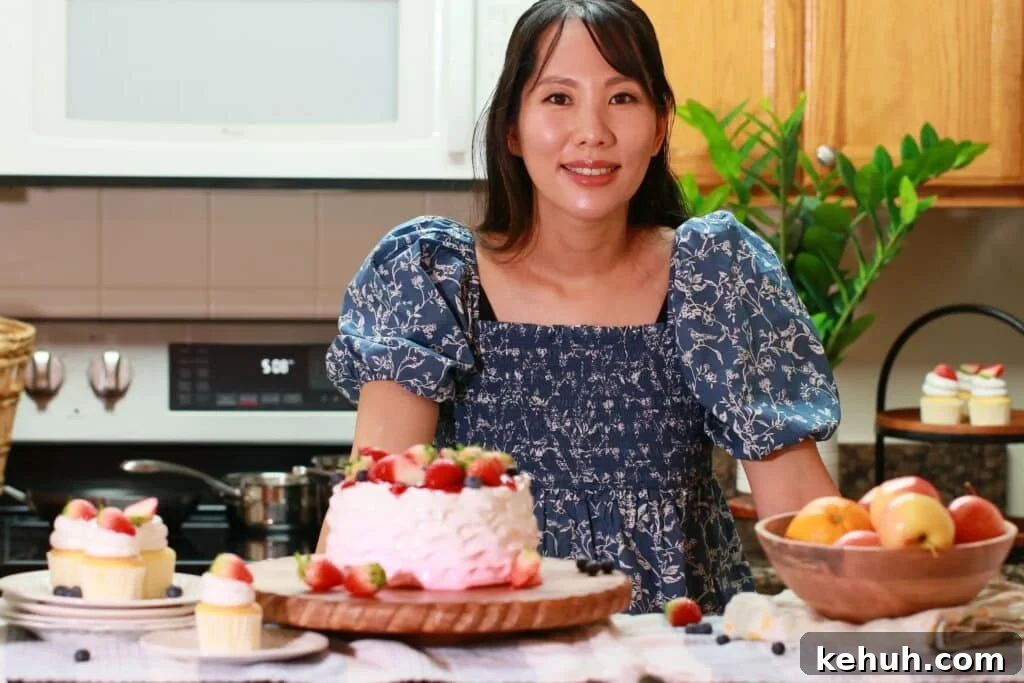
Thank you! – Aya
Perfect Swiss Meringue
Pin Recipe
Video
Ingredients
- 150 g (5 small to medium eggs) Egg white
- 225 g (1 ⅛ cups) Granulated sugar
NOTE: For best results, weigh ingredients. The recipe is designed using grams; cup measures are provided for convenience.
Equipment
-
Saucepan
-
Bowl
-
Thermometer
-
Stand mixer with a whisk attachment (or hand mixer)
-
Spatula
Method
-
Separate eggs, ensuring no yolk is included. Prepare simmering water in a saucepan for the double boiler.
-
Combine 150 g egg whites and 225 g granulated sugar in a large bowl and whisk to combine.
-
Heat over a water bath while stirring constantly and remove from heat at 160°F (71°C).
-
Dry the bottom of the bowl, transfer the mixture to a stand mixer, and start whipping immediately at high speed with a whisk attachment.
-
Reduce speed as the mixture cools: medium when comfortably warm, and low–medium when slightly warm.
-
Stop whipping when the meringue has cooled to near room temperature and use immediately. The meringue should be stiff, elastic and smooth.
Notes
8 Tips For Perfect Swiss Meringue
- Ensure tools are dry and free of oil. Even small amounts of fat prevent proper whipping.
- Heat gently with a water bath and avoid direct contact between the bowl and boiling water.
- Stir continuously and scrape the bowl to prevent partial cooking.
- Heat to about 160°F (71°C) for a stable meringue; adjust slightly for a softer finish if needed.
- Use a candy thermometer for accuracy or test for smoothness by rubbing a small amount between your fingers.
- Begin whipping immediately after heating — warm whites whip up more.
- Stop whipping when cooled to room temperature to avoid volume loss from overmixing.
- Use the meringue right away; it firms as it sits and cannot be easily rewhipped.
Nutrition
Tried this recipe?
Let us know how it was!